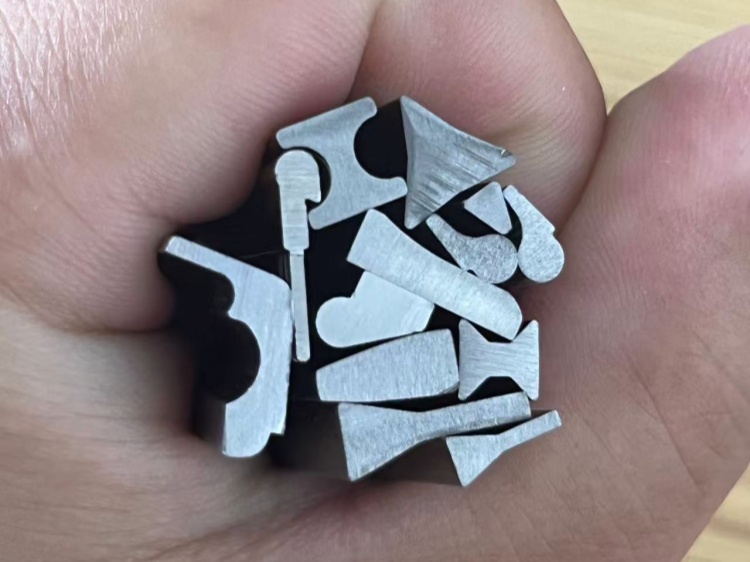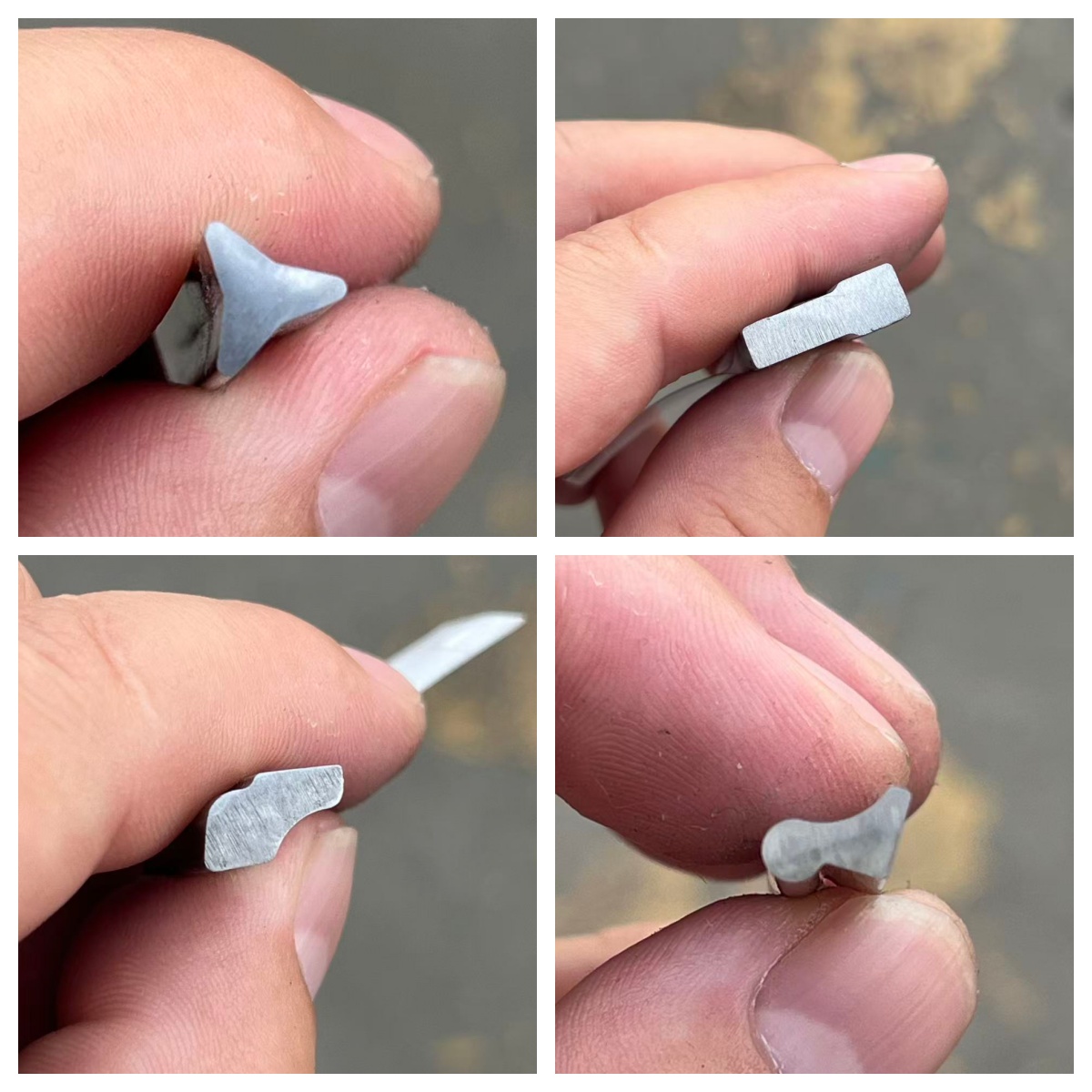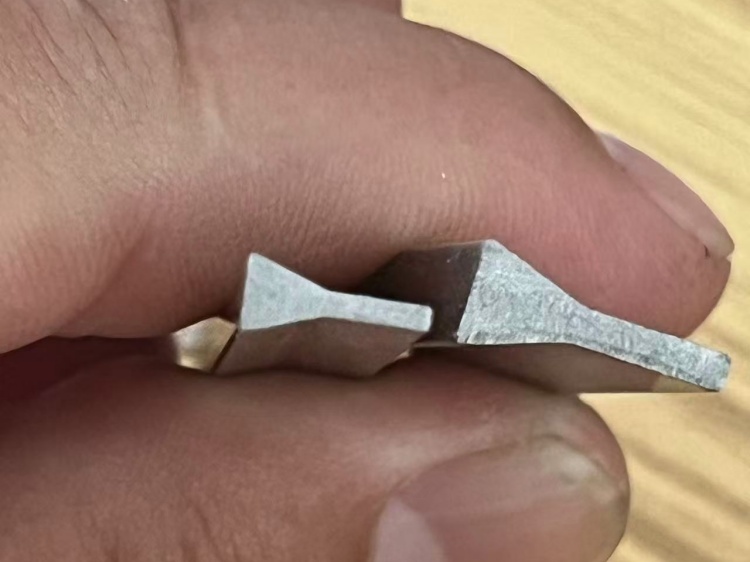
That definition covers a lot of ground, though. The reason shaped wire exists at all comes down to function. A round wire works fine when you just need something to carry current or hold tension. But the moment a part needs to slide into a slot, seal against a surface, filter a fluid, or lock into an assembly, the geometry of the cross-section starts doing real work. At that point, the shape isn’t decorative. It’s the whole point of the part.
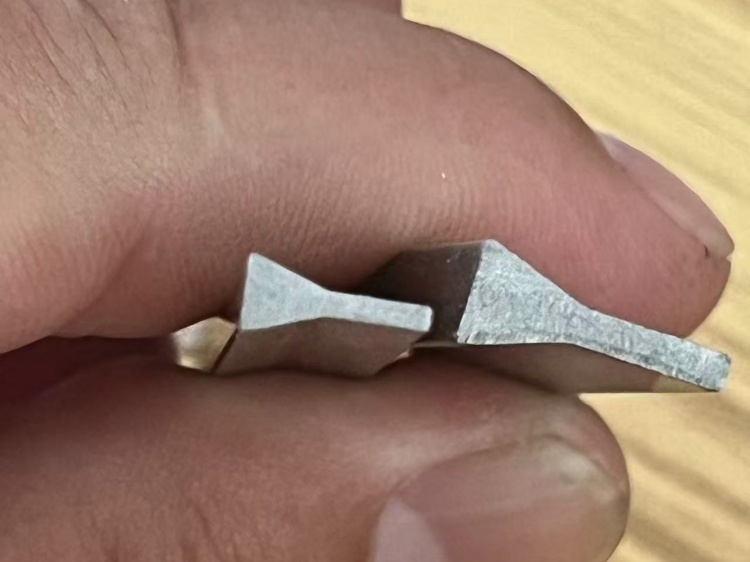
There are two main routes, and most manufacturers use both.
Cold drawing pulls a round wire rod through a tungsten carbide die cut to the target profile. Each pass reduces the cross-section and pushes the metal closer to its final shape. Several dies in sequence are common for complex profiles, because trying to hit a finished shape in one pass usually tears the wire or wears the die out fast.
Roll forming (or turks head rolling) squeezes the wire between paired rollers instead. It’s the better choice for wider flat wire and for shapes with large radius requirements, and it tends to be gentler on the material.
Either way, the process work-hardens the metal, which is usually a benefit: the finished wire ends up stronger and stiffer than the annealed rod it started from. After forming, wires go through annealing, pickling, or polishing depending on what the application calls for.
| Profile | Typical Use |
|---|---|
| Square | Guides, frames, gratings |
| Rectangular / flat | Springs, clips, brush cores, transformer windings |
| Wedge (V-shaped) | Well screens, filtration elements |
| Trapezoidal | Locking components, saw chain parts |
| Half-round / D-shaped | Sliding contacts, decorative trim |
| Oval | Zipper stops, specialty fasteners |
| Custom profiles | Anything drawn to a customer’s print |
Most manufacturers, ERQI Wire included, will produce profiles straight from a customer’s drawing. If you can put tolerances on it, a die can usually be cut for it.
The shape gets the attention, but material selection decides whether the wire survives in service. The workhorses are 304 and 316L stainless steel, which handle corrosion well at a reasonable cost. Carbon steel fits indoor, low-corrosion duty where cost is the driver. On the demanding end — oilfield completions, chemical filtration, marine hardware — duplex and super duplex alloys, Inconel, and Monel take over, because a screen that corrodes in a producing well is a very expensive problem.
Copper and brass shaped wires show up in electrical contacts and decorative work, where conductivity or appearance is the priority.
Shaped wire tends to hide inside products you’d never associate with it:
Round wire is cheaper and faster to produce, so nobody shapes a wire for fun. You move to a profile when the assembly around the wire demands it — when you’d otherwise have to machine the round wire afterward, waste material, or accept a part that doesn’t quite do its job. Done right, a shaped wire replaces a machined component at a fraction of the cost, because the forming happens in the die rather than on a milling machine.
Is shaped wire the same as profile wire?
Yes. Both terms describe wire with a non-circular, engineered cross-section. “Profile wire” is more common in European usage; “shaped wire” dominates in North America.
What tolerances can shaped wire hold?
Precision manufacturers routinely hold ±0.01 mm on critical dimensions. Tighter tolerances are possible but raise cost, since they require more drawing passes and closer process control.
Can I order shaped wire from a drawing?
That’s the standard way it’s bought. You supply the print with dimensions, tolerances, material, and required mechanical properties; the manufacturer cuts or grinds the tooling and draws samples for approval before production.
What’s the minimum order?
It varies. Custom tooling has to be amortized somehow, so very small orders carry a setup cost — but many manufacturers, ERQI Wire included, will run trial lots for qualification purposes.
Contact: Kevin
Phone: +8613669008985
Whatsapp:+8613669008985
Email: info@erqiwire.com
Add: HuBei Province, XangYang No.6
Web:hettps://www.erqiwire.com