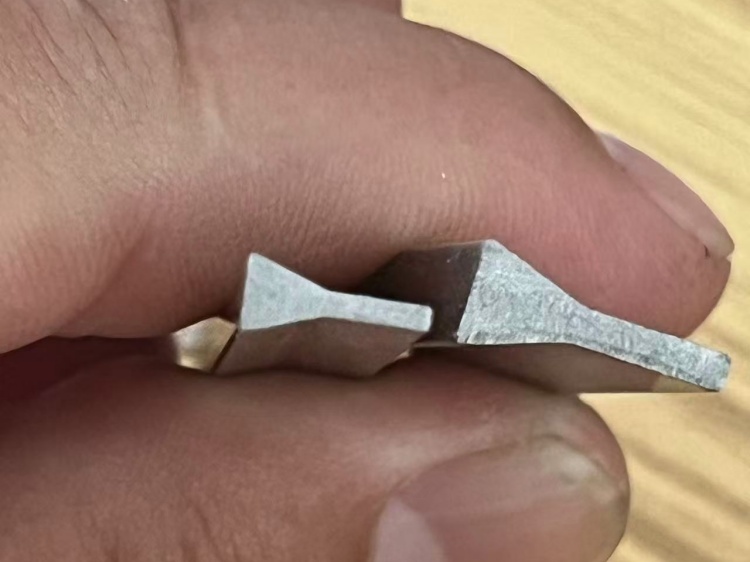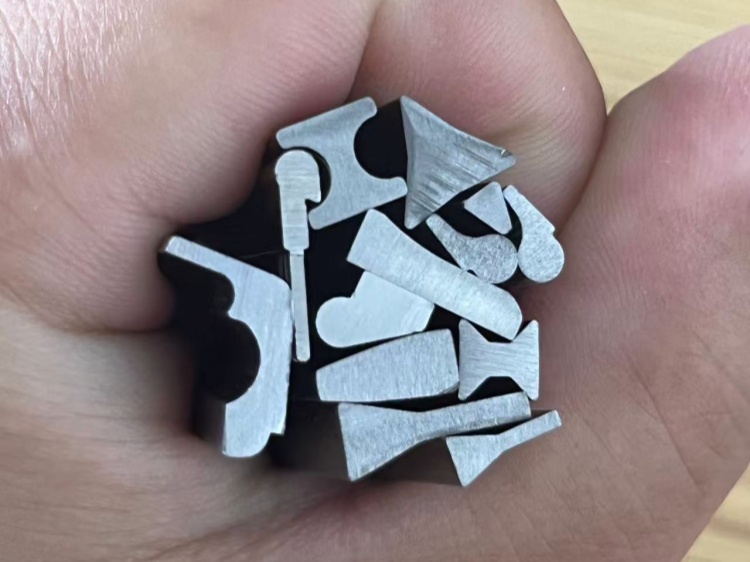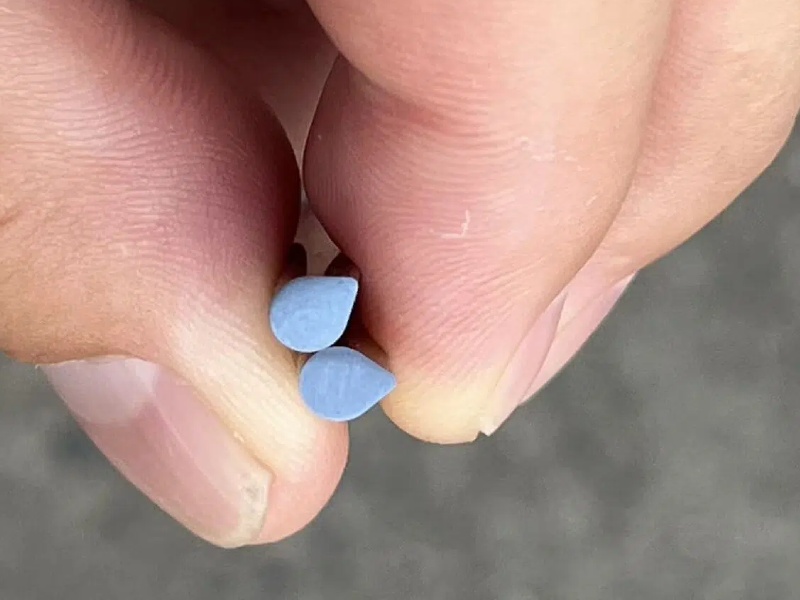
Most buyers see shaped wire as a finished spool and never think about how a round coil of steel becomes a square, flat, or wedge cross-section. The short version: it’s rolled and drawn into shape. The long version matters, because the process decides your tolerances, your surface finish, and whether the part survives in the field.
This is the process we run every week at ERQI Wire, from fine 1 mm profiles up to heavier section wire, in stainless, carbon, and specialty alloys.
Shaped wire is formed by two operations working in sequence. Cold rolling does the heavy shaping — it pushes round wire into the rough profile quickly and cheaply. Drawing then finishes that profile to exact dimensions. You can’t get a precision profile from rolling alone (the corners and tolerances aren’t there), and you wouldn’t draw from round in one pass (it cracks). So the line runs: roll, anneal, draw, coil.
1. Start stock. It begins with round drawn wire or rod — typically 5.5 mm or 8 mm for the smaller profiles — already clean and consistent. Diameter variation at this stage carries straight through, so the input has to be right.
2. Cold rolling . The round stock passes through profiled rolls cut to your drawing. This is where most of the shape change happens: a square, flat, wedge, half-round, or fully custom section takes form here, fast. Rolling sets the section but leaves the corners and edges rougher than the final part allows.
3. Annealing . Rolling work-hardens the metal quickly. Stainless and high-carbon grades lose ductility after only a little reduction, so the wire goes through a soft-anneal furnace to restore formability before the finishing stage. Skip this and the material cracks on the next pass — usually somewhere you can’t see it until the part is already in service.
4. Drawing . The annealed, roughly-profiled wire is pulled through shaped dies — each one a little closer to final size — to land on the exact cross-section and tolerance. This is the precision stage, where we hold ±0.01 mm on the dimensions that matter. Drawing also cleans up the corners and surface that rolling leaves behind.
5. Coiling . Finished wire is wound onto spools for spring and forming lines, or straightened and cut to length where the part calls for it. Straightening a non-round section takes profiled straightener rolls, not the round-roll setup used for ordinary wire.
6. Inspection. The final profile is checked against the drawing — with optical comparators, laser gauges, or dedicated fixtures — for cross-section dimensions, corner radii, twist, and surface condition.
Die wear is the biggest factor. A fresh die holds tight; a die that’s drawn ten tonnes of wire through it drifts. We measure and rotate tooling to keep profiles on target.
Springback is the other one. Metal elastically recovers a fraction of the deformation when it leaves the die, so the die has to be cut slightly past final size to land on target. Getting that offset right is experience, not a formula — it’s why first samples often need a die tweak.
Surface finish comes down to how clean the rolling start was and how the finishing draw was run. A well-controlled draw gives a bright, smooth wire; a rough rolling pass leaves marks that show up under plating or in a seal.
|
Stage |
Role in the process |
What it controls |
|
Cold rolling |
Rough shape, fast and cheap |
Section form, cost |
|
Annealing |
Restores ductility |
Prevents cracking |
|
Drawing |
Final precision |
Tolerance (±0.01 mm), corners, surface |
|
Coiling |
Delivery form |
Spool or cut length |
Can you make a profile from my drawing? Yes — that’s the normal case. Send the cross-section with tolerances and material, and the rolls and dies are cut to match. Custom profiles are most of what we run.
What’s the tightest tolerance you hold? On critical dimensions we hold ±0.01 mm, depending on size and material.
Which materials can be shaped? 304/316L stainless, 301/302 spring grades, carbon and alloy steel, duplex, Inconel, Monel, and most nickel alloys.
How long does new tooling take? Rolls and a profile die are typically cut and sampled within a couple of weeks; existing profiles run from stock tooling.
If you’re specifying shaped wire and want a straight read on whether your tolerance or material is realistic for the process, send the drawing — we’ll tell you whether the line will roll, anneal, and draw it the way you need.
Contact: Kevin
Phone: +8613669008985
Whatsapp:+8613669008985
Email: info@erqiwire.com
Add: HuBei Province, XangYang No.6
Web:hettps://www.erqiwire.com