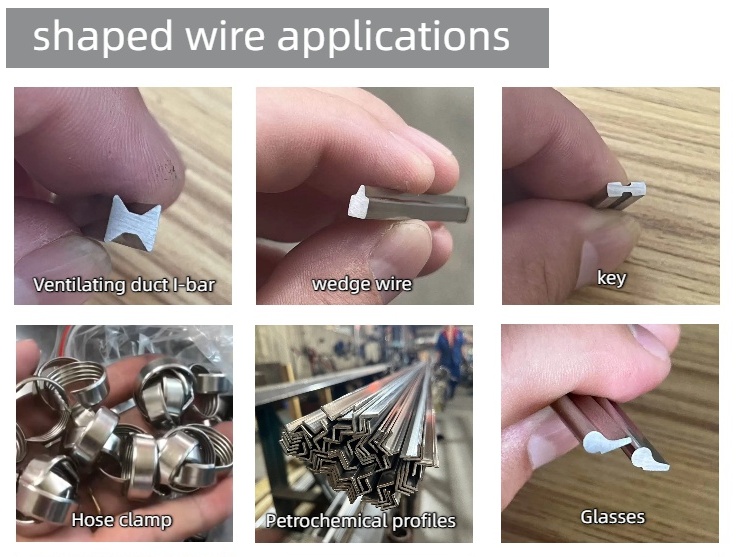
Shaped Wire Applications: Where Profile Wire Actually Does the Work
Round wire is the default for a reason — it’s cheap and it’s everywhere. But the moment a part has to lock, seal, filter, or carry load in a specific direction, the circle stops being the right shape. That’s the whole point of shaped wire (also called profile wire): the cross-section is doing a job, not just holding material together.
At ERQI Wire we cut tooling for these profiles every week, and the same wire shows up in places most people never look. Here’s where shaped wire actually goes.
Why the shape earns its place
A round wire can’t wedge into a slot, can’t present a flat face to a seal, and can’t hold a corner under spring load without deforming. Change the section and you change what the part can do — usually replacing a machined component with a drawn one at a fraction of the cost. That’s the reason shaped wire exists: form follows function, and the function is usually “hold, filter, or lock.”
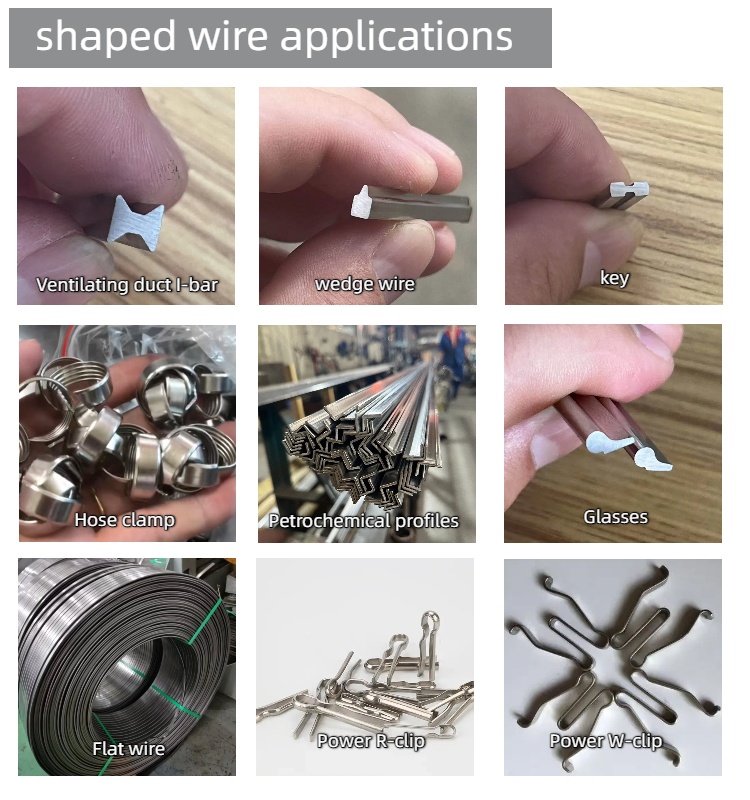
A few worth a closer look
Well screens. This is the classic wedge wire job. Wire is drawn to a V or trapezoidal section and wound around support rods to form a continuous slot. The slot is wider on the inside than the outside, so particles that enter don’t jam — and a plugged screen in an oil well or a municipal water intake is an expensive failure. Tolerances on the slot matter more than most buyers expect.
Automotive. Clips, retaining rings, wiper components, seat mechanisms — most are flat or square wire drawn to a profile and bent into shape. The profile lets the clip snap into a stamped slot without secondary machining, which is why a car carries dozens of these parts you’ll never see. Spring rate depends on the section, so the wire has to be consistent run to run.
Medical. Guide wires, stylets, and orthodontic parts use fine profiles with tightly controlled edges and radii. A burr or a corner out of spec isn’t a cosmetic issue here — it’s a failure. That’s why medical grades run in 304, 316L, and nickel alloys with full traceability.
Architecture. Flat and ribbon wire woven into mesh gives façades and balustrades a clean, linear look that round wire can’t match. The profile also makes the weave rigid, so large panels hold their shape instead of sagging.
Material follows the job
The application decides the alloy as much as the shape does:
●304/316L stainless — corrosion service, food, medical, architecture
●301/302 spring grades — clips and springs that have to return
●Carbon and alloy steel — cost-sensitive, high-strength parts
●Duplex, Inconel, Monel — aggressive chemical or high-temperature service
If a part sees salt, heat, or acid, the material choice usually matters more than the tolerance.