Home/Products/Profile Wire/Asymmetric Profile Wire
Asymmetric Profile Wire
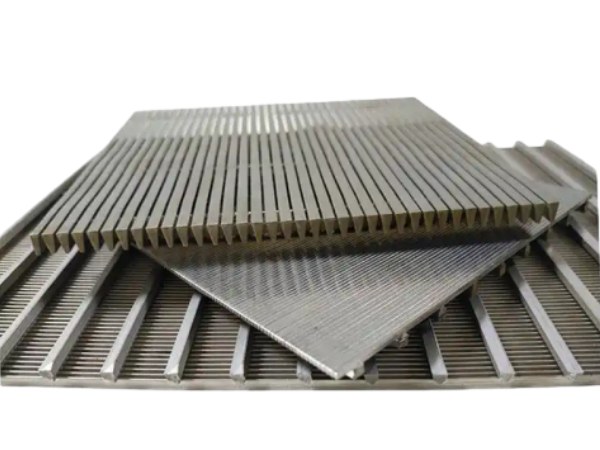
Non-symmetric profile wire made to drawing: stepped, hooked or one-side-flat sections. The asymmetry is usually there to prevent wrong assembly or to lock the part in a groove.
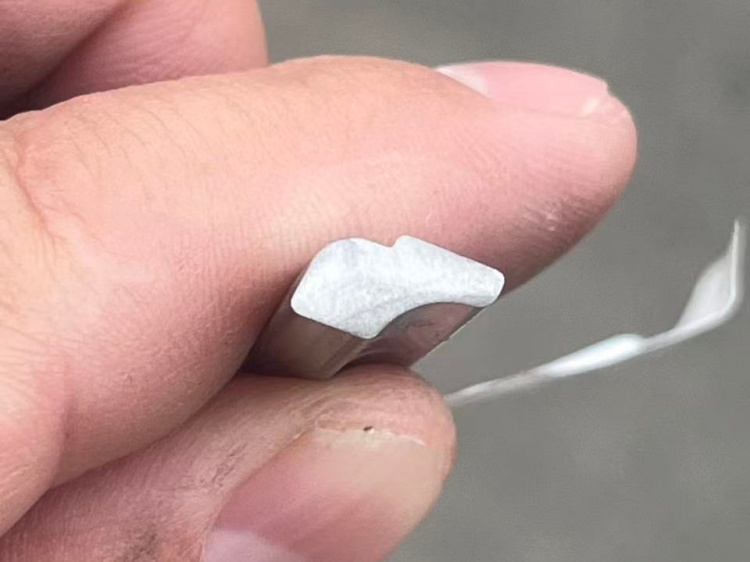
Asymmetric Profile Wire
Non-symmetric profile wire made to drawing: stepped, hooked or one-side-flat sections. The asymmetry is usually there to prevent wrong assembly or to lock the part in a groove.
| Material | 304 / 316L / 430 stainless steel, copper and aluminium on request |
|---|---|
| Size range | Section circumscribed circle 0.5-12 mm, tolerance from +/-0.02 mm |
| Typical application | Keyed assembly parts, seal carrier profiles, guide rails, terminals, textile machine parts |
| Cross-section | Square — also drawn to your drawing |
| Surface | Bright drawn, as required |
| Packing | Coil, spool or straight length |
Most profile wire is symmetric: a triangle, a square, a half round, a T. An asymmetric section is the one that is not — flat on one side and sloped on the other, thick at one edge and thin at the other, stepped, hooked, or carrying a small key. Buyers often describe these as a special shape and leave it there, but the asymmetry is almost always doing a specific job, and knowing which job tells you what to put on the drawing.
Four reasons a section is made asymmetric
It only fits one way. A part that can be installed in two orientations needs a poka-yoke fixture on the line; a part that physically cannot go in backwards does not. One flat face and one ramp is enough to make the wrong assembly impossible, and it costs nothing extra once the die exists.
Sealing works in one direction only. A ramp side compresses an elastomer or a lip as it is pressed in; the flat side lets it relax. That is how a small profile becomes a one-way seal carrier without a separate spring.
It locks into a groove. A hook or a step that engages a matching recess turns a push-fit part into a mechanically retained one. No adhesive, no screw, no risk of the part dropping out in service.
It routes flow or thread. A groove on one side carries media, a wire or a fibre to where it needs to go, while the other side stays a clean bearing surface.
How it is made, and where it gets difficult
Small asymmetric sections are drawn through a shaped die, in several passes, from round or from a rolled preform. Larger sections or ones with a pronounced step start from a rolled profile and are then drawn to finish. The hard part is that an asymmetric section does not pull evenly: the mass is not balanced around the axis, so the wire wants to rotate and drift to the heavy side. Holding it straight is a matter of die correction and tension control, and it is why a new asymmetric section usually takes more than one trial before the first good coil.
What to send with the enquiry
The section drawing with tolerances is the beginning, not the whole story. Three more things decide whether the part works: the mating part (what it slides into or against), the assembly direction (which face leads), and the load direction (which face carries force). A section that is dimensionally correct but has its tolerance budget on the wrong face will assemble and then rattle. Add the surface requirement — bright, annealed, or with a specific Ra — and the quote can be firm instead of guesswork.
Specifications
| Material | 304 / 316L / 430 stainless steel, copper and aluminium on request |
|---|---|
| Section size | 0.5–12 mm circumscribed circle |
| Tolerance | From ±0.02 mm on functional dimensions |
| Process | Shaped-die drawing, or roll then draw for heavy or stepped sections |
| Surface | Bright-drawn, bright-annealed, or pickled |
| Supply | Coil, spool, or cut and deburred lengths |
| Tooling | New die per section; sample before batch |
| Use | Keyed assembly parts, seal carriers, guide rails, terminals, textile parts |
For the general range see shaped wire, and for symmetric specials the T-bar and round-edge pages. If you are moving a machined part over to wire, the drawing-to-sample walkthrough covers what happens first. Ready to quote? Send the section drawing and the mating part.
Related products
Ready to start your project?
Send us your drawing or sample — we reply within 24 hours on working days.