Home/Products/Triangular Wire/Flat-Back Triangular Wire
Flat-Back Triangular Wire
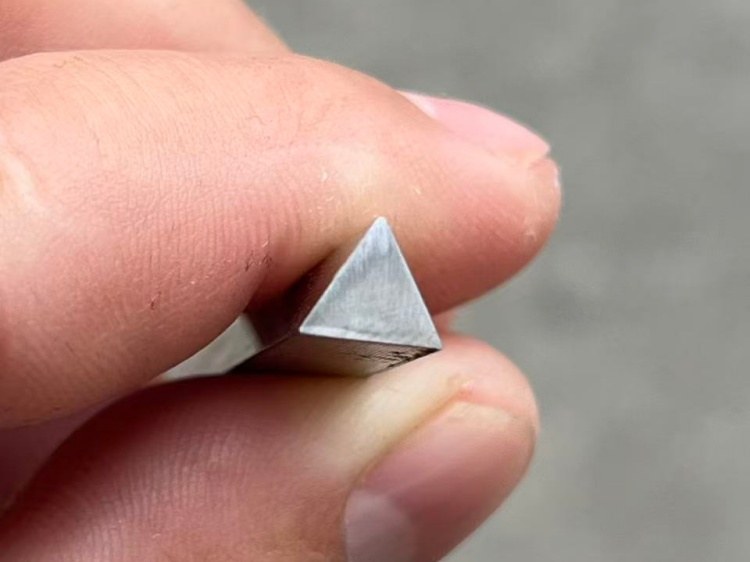
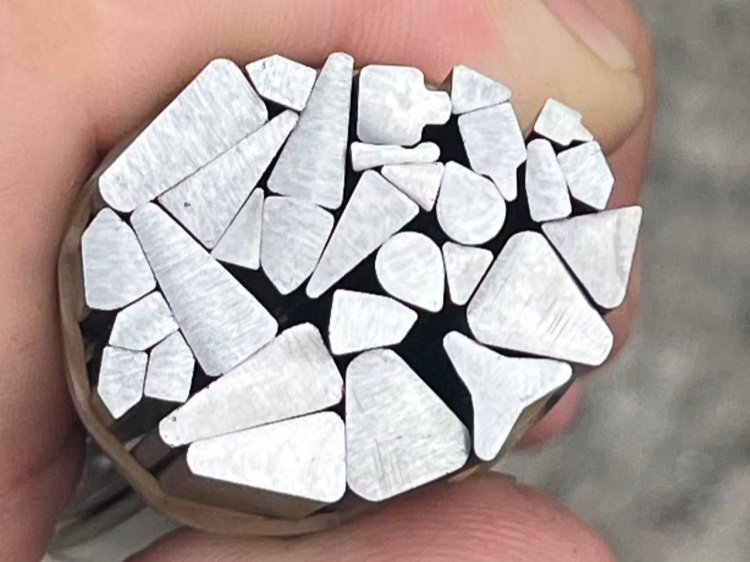
A triangular section with one face flattened: the V still forms the slot, the flat face gives the weld or seat a stable landing. The variant to ask for when the wire is welded rather than only clamped.
Flat-Back Triangular Wire
A triangular section with one face flattened: the V still forms the slot, the flat face gives the weld or seat a stable landing. The variant to ask for when the wire is welded rather than only clamped.
| Material | 304 / 316L / 430 stainless steel; other grades on request |
|---|---|
| Size range | Width 1.5-6 mm, height 1.5-8 mm, flat face width 0.5-1.5 mm; tolerance from +/-0.03 mm |
| Typical application | Wedge wire screens with welded backing, sieve bends, filter elements needing a flat weld seat, screen repair segments |
| Cross-section | Square — also drawn to your drawing |
| Surface | Bright drawn, as required |
| Packing | Coil, spool or straight length |
Flat-back triangular wire is the standard V-profile with one modification: instead of a fully pointed back, one face is flattened into a narrow land, typically 0.5–1.5 mm wide. The apex still points outward and still forms the slot; the flat face on the back is there for one reason — it gives the weld bead, the clamp or the support rib a flat surface to land on.
Why the flat face exists
Standard triangular wire is clamped or looped into the screen frame. That works when the screen is built as a tensioned assembly. But a large share of wedge wire screens are welded: each profile is fusion-welded to the support rods at every intersection. A knife edge meets a round support rod at a single tangent line — the arc is unstable, burn-through is common, and the weld quality varies with the operator.
A flat back changes the joint geometry. The weld lands on a defined land, penetration is repeatable, and the profile sits square against the rod without rolling. The result is a screen that holds slot accuracy after welding instead of drifting as the welds shrink.
Where it is the right choice
- Fully welded screens. Oil well screens, water well screens and laterals where every wrap is welded to the support.
- Sieve bends and static screens. Profiles seat flat into machined grooves in the frame.
- Repair segments. A patch welded into an existing screen — the flat face forgives the hand-positioning that repair welding involves.
- Filter elements with bonded backing. Adhesive and brazing both need a land, not an edge.
If your screen is built by looping and tension rather than welding, standard pointed-back triangular wire is lighter and cheaper — see the standard sizes on the triangular wire list.
How the flat face is specified
Three numbers, then the slot: profile width, height, and flat-face width. The face width is the trade-off dial — wider lands weld more easily but reduce the effective V depth slightly; a narrow land keeps the slot geometry close to a standard profile. For machine welding, 1.0 mm is a common starting point; for hand welding and repair work, 1.2–1.5 mm forgives more.
The slot itself is formed by the apex angle, exactly as with standard V-wire, so slot sizing carries over. The 3×5 triangular wire and 1.8×2.7 pages show how slot and profile dimensions relate.
Specifications
| Section | Triangular (V) profile, one back face flattened to a land |
|---|---|
| Width | 1.5–6 mm |
| Height | 1.5–8 mm |
| Flat-face width | 0.5–1.5 mm typical (1.0 mm common for machine welding) |
| Material | 304 / 316L / 430 stainless; other grades on request |
| Tolerance | From ±0.03 mm on width and height |
| Surface | Bright-drawn; pickled on request |
| Supply | Coil, straight lengths, or pre-cut screen lengths |
| Use | Welded wedge wire screens, sieve bends, repair segments, bonded filter elements |
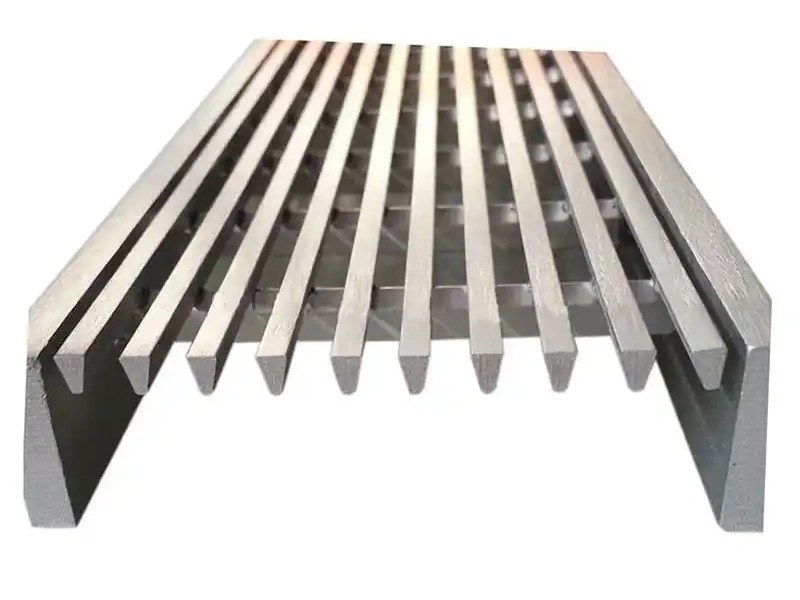
Slot geometry, K-profiles and the screen-specific naming are covered in V, K or trapezoid; the screen assemblies these profiles build are under wedge wire. Send the slot width and whether the screen is welded or looped — the flat-face width follows from that one answer.
Related products
Ready to start your project?
Send us your drawing or sample — we reply within 24 hours on working days.