Home/Products/Support Bar/Support Bar Materials & Alloys
Support Bar Materials & Alloys
Support bar alloy selection for wedge wire screens: why the bar sets the corrosion floor of the whole screen, which alloys pair with which wire, and where a high-strength bar buys open area.
Support Bar Materials & Alloys
Support bar alloy selection for wedge wire screens: why the bar sets the corrosion floor of the whole screen, which alloys pair with which wire, and where a high-strength bar buys open area.
| Material | 304 / 316L / 2205 / 2507 / C276 / 202B / 809C |
|---|---|
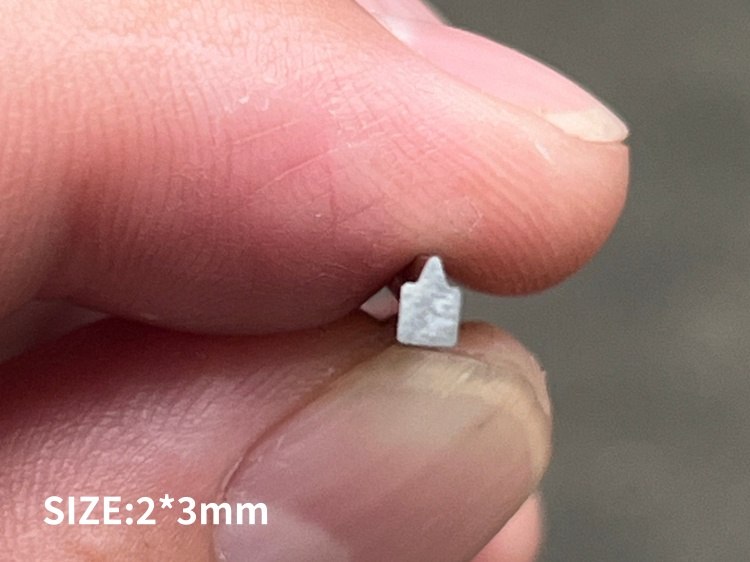
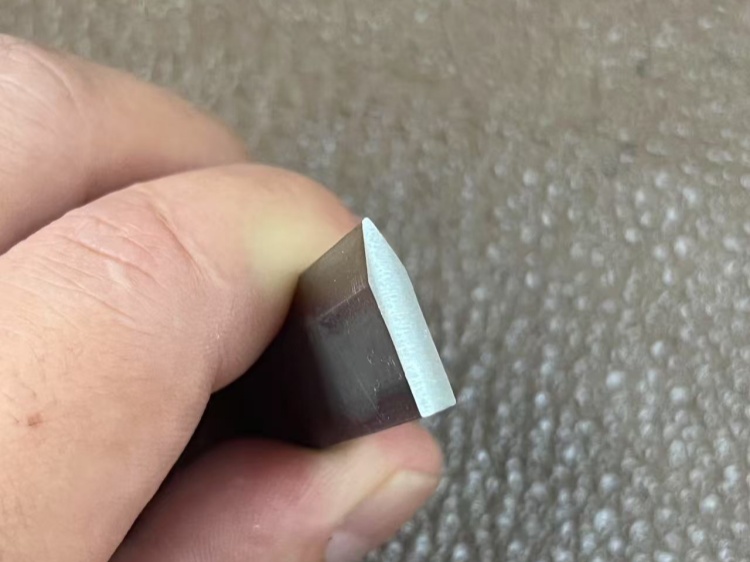
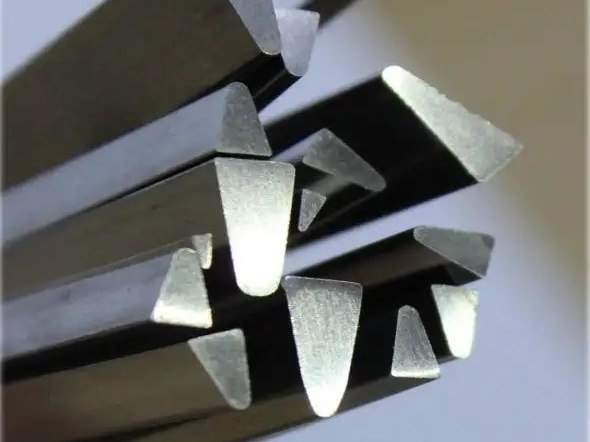
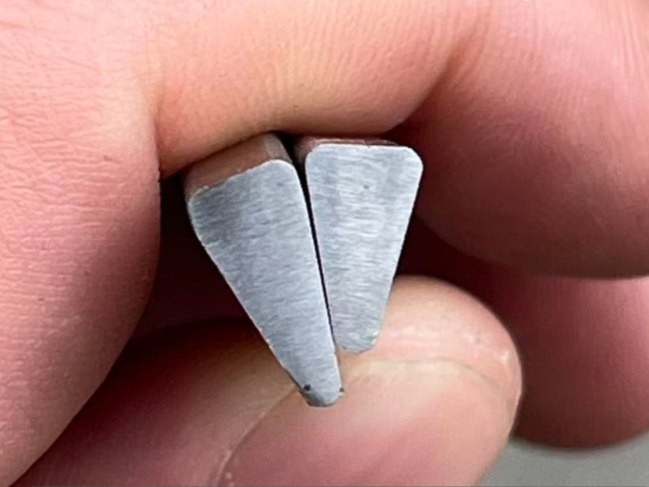
| Size range | Profile heights 3-20 mm, widths 2-12 mm, rectangular, trapezoidal, T and dovetail sections; mill finish, pickled or machined |
| Typical application | Load-bearing bars behind V-profile wire in wedge wire screens, laterals and panels; alloy matched to the wire and the medium |
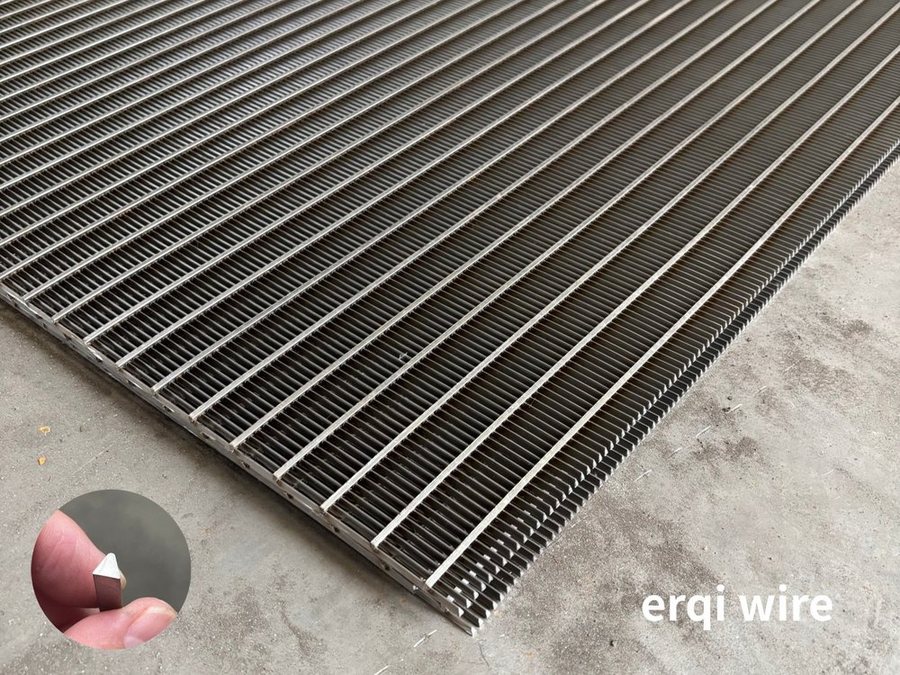
| Cross-section | Square — also drawn to your drawing |
| Surface | Bright drawn, as required |
| Packing | Coil, spool or straight length |
A support bar looks like the cheap part of a screen: a straight length of profile steel that holds the V-wire at a fixed spacing. Buyers treat it as an accessory, and that is exactly where screens fail. The bar carries the load, it occupies open area, it provides the mounting face, and — the part nobody quotes — it sets the corrosion floor for every weld on the panel.
Four jobs, one part
It carries the load. Deflection between bars is what decides whether a vibrating panel fatigues or survives. Bar section and bar spacing are the two variables, and they trade against open area.
It occupies open area. Every millimetre of bar width that faces the flow is a millimetre that is not slot. On a fine screen the bars can take three to eight percentage points of open area, which is throughput given away if the selection was casual.
It gives the mounting face. Flat-bottom and dovetail bars locate the panel on the deck frame; a round bar cannot do this without an adapter.
It takes the weld. Hundreds of spot welds per panel land on the bar, not on the wire. The bar's alloy decides whether those welds survive the medium.
The rule that costs the most to get wrong
Everything inside the wetted boundary must be the same alloy. A screen is a galvanic couple by construction: wire, bars and weld metal are in electrical contact and immersed in the same electrolyte. Where the alloys differ, the more active one becomes the anode and corrodes faster than it would alone — and the rate is driven by the area ratio, so a small anode facing a large cathode is the worst case.
| V-profile wire | Support bar | Note |
|---|---|---|
| 304 | 304 | Standard pairing, no chloride |
| 316L | 316L | Mild chloride, standard duty |
| 2205 / 2507 | Same duplex grade | Do not pair duplex wire with 316L bars in chloride |
| C276 | C276 only | Mixed metal here fails at the bar weld |
| 202B / 809C | Same alloy | For mining duty; see the welding note below |
There is one legitimate exception: a bar that never sees the medium — a structural member outside the screen envelope, bolted with an insulating barrier — can be a cheaper grade. Inside the envelope, there is no exception worth the risk.
Where a stronger bar buys open area
This is the one place where paying more for the bar returns something measurable. 2205 support bars yield at roughly 450 MPa against 190 MPa for 316L. At the same deflection limit, a duplex bar can be about 20 % thinner, or spaced 20–25 % wider. Wider spacing on a fine screen is two to three percentage points of open area recovered — on a large panel that is real throughput, and it often pays for the alloy upgrade within the first campaign.
The arithmetic is the same one used on the mining screen page: open area falls as bar coverage rises, so the cheapest way to raise open area without changing the slot is to space stiffer bars further apart.
The high-manganese grades, and their welding limit
202B (12Cr18Mn8Ni5N) and 809C (10Cr21Mn16NiN) are the economical answer for abrasive, non-chloride screening: manganese at 8–17 % replaces most of the nickel, nitrogen at 0.2–0.6 % gives the strength, and the surface work-hardens under abrasion. They cost a fraction of duplex and outlast 304 several times over on coal and ore.
Their limit is welding. High manganese plus high nitrogen means nitrogen porosity and a hot-cracking tendency in the weld, and the weld zone loses corrosion resistance relative to the parent metal. On a wedge wire screen with hundreds of spot welds that matters. The workable construction for these grades is fewer, larger welds, or mechanical fixing — bolted clamp strips, wedge-lock, or a dovetail bar that holds the wire without welding — rather than the dense automatic welding used on stainless panels.
Bar geometry quick reference
Height 3–20 mm sets the stiffness and the depth of the flow channel. Width 2–12 mm sets the contact face with the wire and the open-area penalty. Rectangular for standard decks; trapezoidal for fine screens where the wire needs a wider weld land; T-section where the bar doubles as a stiffener; dovetail where the wire is locked rather than welded. Spacing runs 40–90 mm on fine filtration screens and 100–300 mm on coarse mining decks.
Available alloys and typical duty
| 304 / 304L | General screening, no chloride, lowest cost |
|---|---|
| 316L | Process water with mild chloride, food and pharma |
| 2205 / 2507 | Chloride with load; higher strength buys open area |
| C276 | Wet chlorine, hypochlorite, mixed acid — wire and bars together |
| 202B | Mining, non-chloride, spot-welded in reduced density |
| 809C | Coal and ore, high abrasion, non-magnetic duty, mechanical fixing |
The wire sections these bars carry are on the wedge wire page, and the general role of the bar in service is in what a support bar does. Send the screen drawing and the medium — the bar alloy follows from the medium, and the bar size follows from the deck load.
Related products
Ready to start your project?
Send us your drawing or sample — we reply within 24 hours on working days.