Home/Products/Wedge Wire/Hastelloy C276 Wedge Wire
Hastelloy C276 Wedge Wire
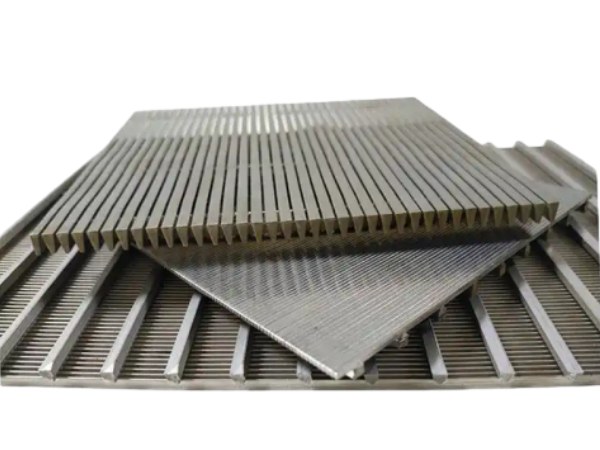
V-profile wedge wire in Hastelloy C276 for screening duty where 316L and duplex fail: wet chlorine, hypochlorite, chlorine dioxide and mixed acid. Low carbon and low silicon so the weld zone keeps its resistance.
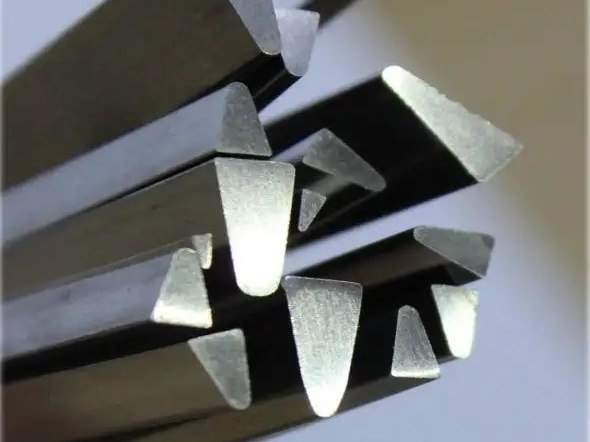
Hastelloy C276 Wedge Wire
V-profile wedge wire in Hastelloy C276 for screening duty where 316L and duplex fail: wet chlorine, hypochlorite, chlorine dioxide and mixed acid. Low carbon and low silicon so the weld zone keeps its resistance.
| Material | Hastelloy C276 (UNS N10276); C22 (N06022) on request |
|---|---|
| Size range | Profile 1.5x2.5 to 4x8 mm, slot 0.10-2.0 mm, cylinders, panels and sieve bends; annealed and pickled |
| Typical application | Wet chlorine and hypochlorite service, chlorine dioxide bleaching, mixed acid, flue gas desulphurisation, pharmaceutical reactors, waste acid recovery |
| Cross-section | Square — also drawn to your drawing |
| Surface | Bright drawn, as required |
| Packing | Coil, spool or straight length |
There is a class of screening duty where the alloy question has only one answer. Wet chlorine, hypochlorite, chlorine dioxide, mixed sulphuric-hydrochloric acid, and chloride solutions carrying oxidising ions will pit 316L in weeks and attack duplex in the ferrite phase. Hastelloy C276 is the alloy that has been specified for those duties for forty years, and it is still the default because the alternatives are either more expensive or narrower.
What C276 actually is
Nickel base, with 14.5–16.5 % chromium, 15–17 % molybdenum, 3–4.5 % tungsten, 4–7 % iron, carbon at 0.01 % maximum and silicon at 0.08 % maximum. Two of those numbers matter more than the rest on a welded screen.
Molybdenum at 15–17 % is what stops chloride pitting and crevice attack, and it does it in both oxidising and reducing conditions — a combination that the stainless grades cannot cover, because they are tuned for one or the other.
Carbon and silicon at those ceilings are what keep the heat-affected zone from precipitating. Higher-carbon versions of the same family form carbides and intermetallic phases at the grain boundaries during welding; the boundary then becomes the corrosion path, and a screen welded thousands of times per panel is nothing but heat-affected zone. C276 was designed around that problem, and it is the reason the low-C low-Si version is the one used for welded screen construction rather than a cast or high-carbon variant.
The environments that force the choice
Wet chlorine and hypochlorite. Sodium hypochlorite at any useful concentration, and chlorine gas with moisture present. This is the single most common reason a C276 screen is ordered.
Chlorine dioxide bleaching. Pulp mill bleach plants combine ClO2, chloride and acid at temperature, which defeats stainless and duplex at the same time.
Mixed acid. Sulphuric acid with chloride contamination, or sulphuric-hydrochloric mixtures in pickling and waste acid recovery. The chloride decides the alloy, not the sulphuric concentration.
Chloride plus oxidiser. Chloride with ferric or cupric ions present is worse than either alone, and it is the classic crevice-corrosion failure mode under a screen support bar.
Flue gas desulphurisation and pharmaceutical reactors, where the chemistry cycles between acidic and neutral and the screen sees both.
Why a C276 screen costs what it costs
The material. Molybdenum and nickel together put C276 at roughly eight to twelve times the price of 304 per kilogram, and that ratio moves with the nickel and moly markets rather than with anything a fabricator controls.
The drawing. C276 work-hardens faster than any stainless grade. A pass that would take 20 % reduction on 316L takes a fraction of that on C276 before the wire has to be annealed again, so a V-profile that takes four passes in stainless takes many more, with an anneal between each. Then a final anneal and pickle. The processing cost is a real share of the price, not a rounding item.
The mistake that kills a C276 screen: mixed alloys
C276 is strongly cathodic. Put it in contact with 316L in a conducting medium and the 316L becomes the anode and dissolves — faster than it would have on its own, because the cathode area is large and the anode area is small. The bad case is a C276 V-wire welded to 316L support bars: a small stainless bar area being driven by a large nickel-alloy cathode, inside a crevice, in exactly the chemistry that made C276 necessary.
The rule is simple and it costs money: everything inside the wetted boundary is the same alloy. Wire, support bars, end rings, flanges, and the welds that join them. If a part must be a different material, it has to be electrically isolated, and on a welded screen that is rarely practical. The support bar material page covers the pairing table.
Fabrication
Filler metal is ERNiCrMo-4. Low heat input, no preheat, interpass temperature controlled — C276 does not need a post-weld heat treatment, but it does need the weld cleaned. A weld bead left with oxide or embedded iron on a C276 screen is a pitting site, and it will be the first place the screen fails.
Machining is slow and gummy; cutting and forming need sharp tooling and carbide. None of that is a reason to avoid the alloy, but it is the reason a C276 quotation has a longer lead time than the stainless one next to it.
When C276 is not the answer
If the duty is chloride but not oxidising, and the temperature stays moderate, 2205 or 2507 does the job at a third of the cost — see duplex wedge wire. If there is no chloride and no acid at all, C276 is a very expensive way to buy abrasion resistance. The full comparison across seven alloys is in abrasion or corrosion first.
Specifications
| Grade | Hastelloy C276 (UNS N10276); C22 (N06022) on request |
|---|---|
| Composition | Ni bal., 14.5–16.5 Cr, 15–17 Mo, 3–4.5 W, 4–7 Fe, C ≤0.01, Si ≤0.08 |
| Profile wire | 1.5×2.5 mm to 4×8 mm V-profile |
| Slot | 0.10–2.0 mm |
| Forms | Cylinders, flat panels, sieve bends, loose wire |
| Support bars | Same alloy as the wire — no mixed-metal construction |
| Welding | ERNiCrMo-4, low heat input, weld cleaned and passivated |
| Surface | Annealed and pickled |
Send the medium, its concentration and its temperature. C276 is usually the right answer, but the quotation is expensive enough that confirming the chemistry first is worth a day.
Related products
Ready to start your project?
Send us your drawing or sample — we reply within 24 hours on working days.