Home/Products/Wedge Wire/Wedge Wire Screen Cylinders
Wedge Wire Screen Cylinders
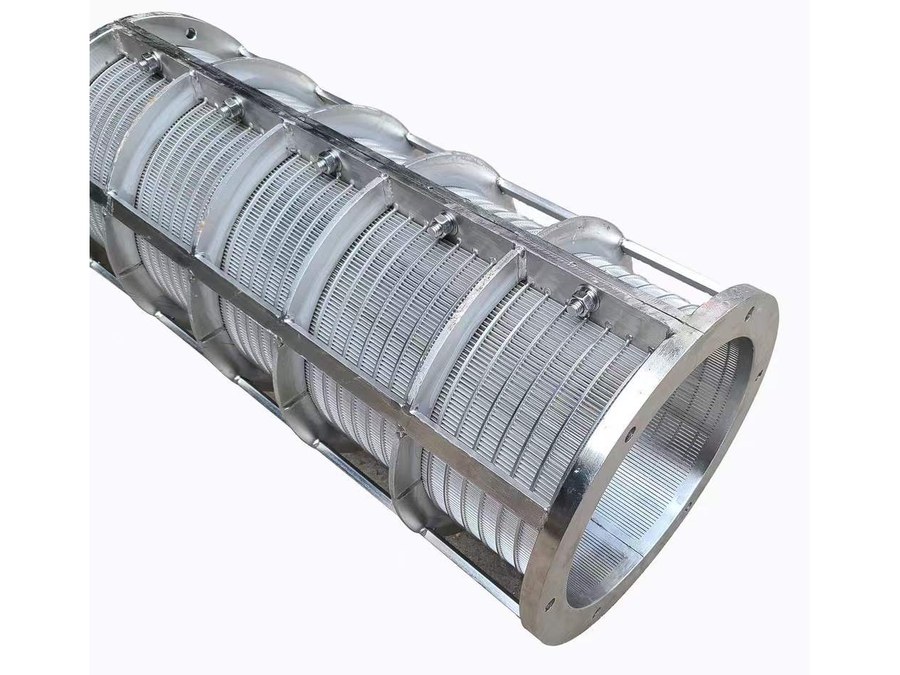
All-welded V-wire cylinders for equipment builders: round to assembly tolerance, slots accurate around the full circumference, end rings machined to your connections. The screening surface inside the machine, not a catalogue tube.
Wedge Wire Screen Cylinders
All-welded V-wire cylinders for equipment builders: round to assembly tolerance, slots accurate around the full circumference, end rings machined to your connections. The screening surface inside the machine, not a catalogue tube.
| Material | 304 / 316L / 2205 duplex / C276; V-wire 1.5x2.5 to 3x5 mm, support rods in matched alloy |
|---|---|
| Size range | OD 40-800 mm, length to 3000 mm, slot 0.05-3.0 mm; axial or circumferential wrap; end rings flanged, threaded or plain, machined to your connection |
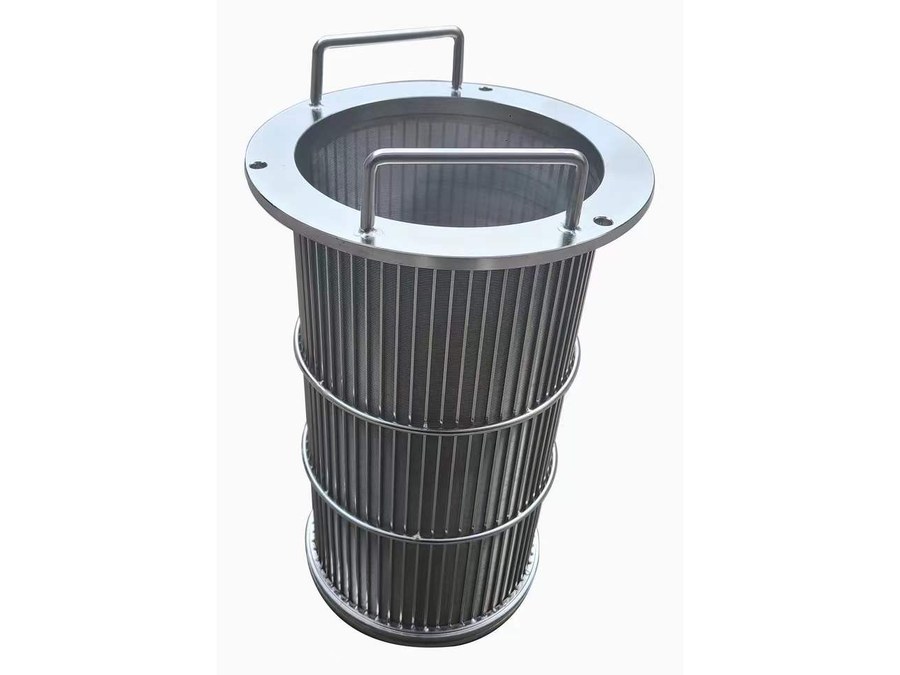
| Typical application | Filter vessel internals, rotary drum and trommel screens, river and seawater intake screens, reactor and vessel filter baskets, dewatering equipment housings |
| Cross-section | Square — also drawn to your drawing |
| Surface | Bright drawn, as required |
| Packing | Coil, spool or straight length |
A screen cylinder is the wrapped surface inside a machine — the rotating drum of a trommel, the basket inside a reactor vessel, the intake screen at the end of a river pipe. It differs from a downhole jacket in what it has to fit: not a thread, but your equipment. So the dimensions that matter are the ones your housing was built around, and every cylinder is made to those rather than picked from a size list.
Roundness is the tolerance that matters
On a jacket, the specification is slot gauge; on a cylinder that turns, it is roundness. An out-of-round cylinder chatters in its bearings, wipes seals, and varies the gap between its surface and any scraper or flighting running against it. We check diameter at several planes along the length and hold the cylinder to the fit your machine needs — tighter than filtration alone would demand, because the cylinder has to run, not just filter.
Wrap direction follows the flow
Two constructions cover most cylinders. Circumferential wrap — wire wound around the circumference on axial rods — gives the smoothest outside face and suits radial inward flow: vessel internals, intake screens, baskets. Axial wrap — wire run along the length on circumferential rods — suits drums where the flow is radial outward and the surface sees wear in the rotation direction. Which one is right depends on how the machine feeds and discharges; send the flow direction and we will say which we would build.
End rings are part of the design
The cylinder is only as useful as its connections. End rings are machined — not bent strip — to flange, thread or plain-bore dimensions, with the wire welded to the ring face rather than the rod ends doing the work. Tell us the connection (a mating flange drawing is ideal) and the cylinder arrives as a drop-in part.
Specifications
| OD | 40–800 mm |
|---|---|
| Length | To 3000 mm in one piece; longer by flanged sections |
| Slot | 0.05–3.0 mm at the outside face |
| Construction | Circumferential or axial wrap, all-welded at every crossing |
| End rings | Flanged, threaded or plain; machined to your drawing |
| Materials | 304, 316L, 2205 duplex, C276 — wire, rods and rings matched |
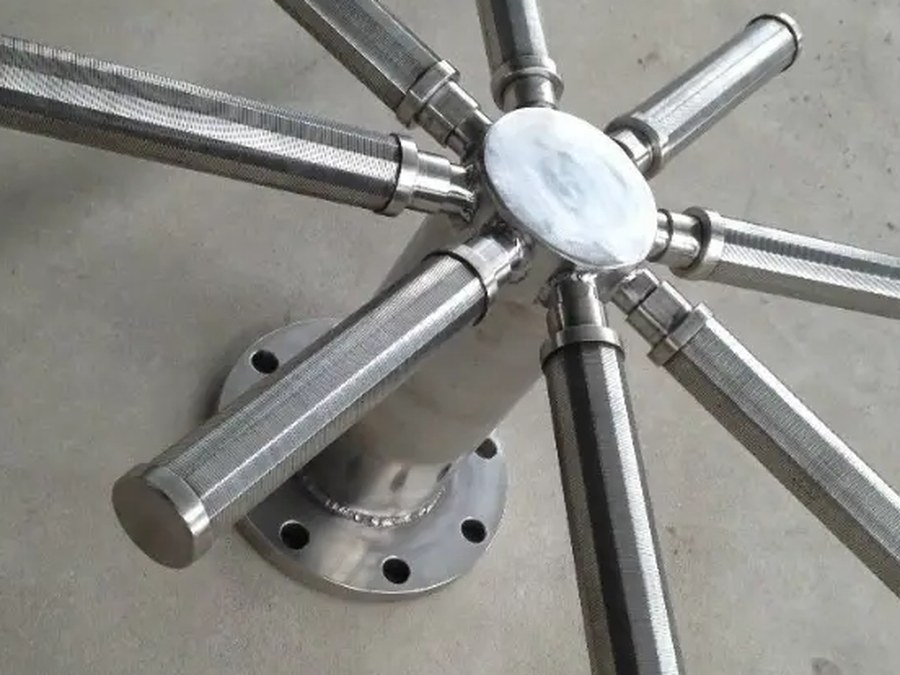
Cylinders share wire and rod construction with our flat screen panels and screen laterals, and the wrap itself is the V-profile wire from our own mill runs. Downhole jackets at API sizes are on the screen jackets page. Send the OD, slot, length and connection, and the quote will come back with the wrap direction and roundness figure we would hold — not just a tube size.
Related products
Ready to start your project?
Send us your drawing or sample — we reply within 24 hours on working days.