Home/Products/Wedge Wire/Wedge Wire Strainer Baskets
Wedge Wire Strainer Baskets
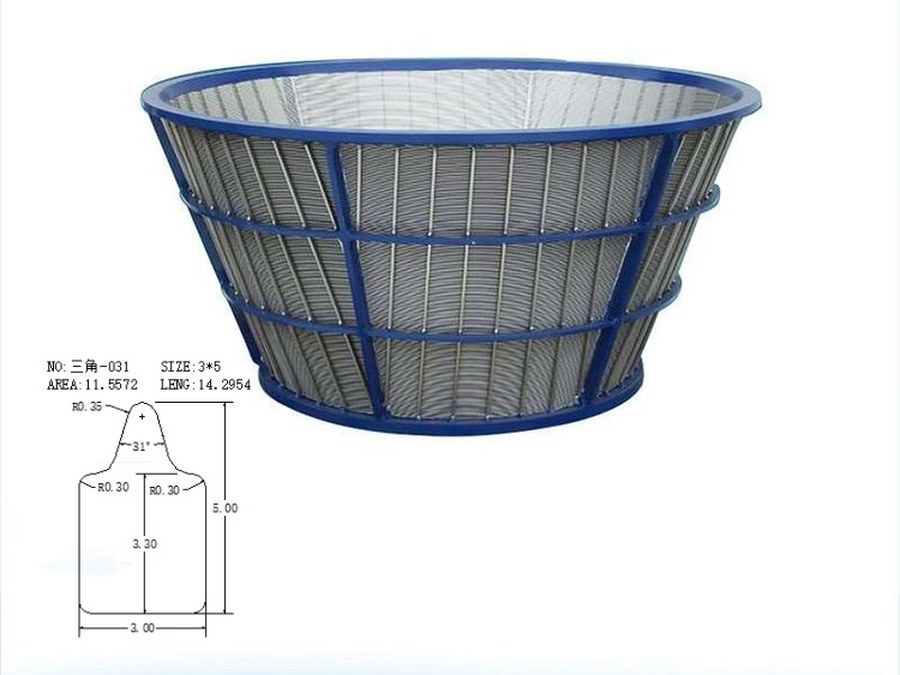
The element inside a basket strainer, built in wedge wire instead of perforated sheet: several times the open area, no cloth or mesh to tear, and a basket that back-flushes clean without opening the housing twice.
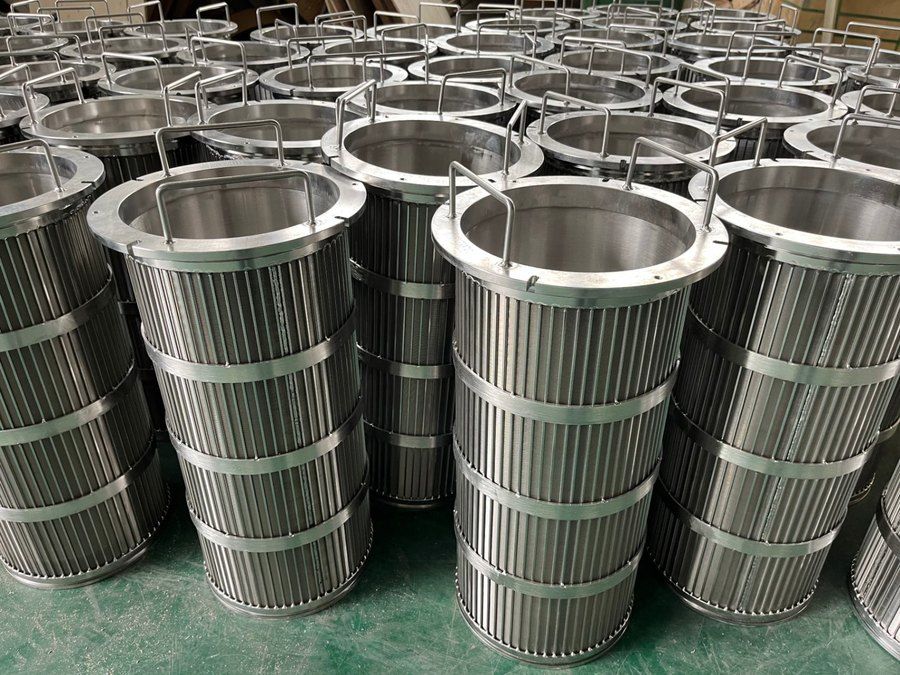
Wedge Wire Strainer Baskets
The element inside a basket strainer, built in wedge wire instead of perforated sheet: several times the open area, no cloth or mesh to tear, and a basket that back-flushes clean without opening the housing twice.
| Material | 304 / 316L / 2205 duplex; one-piece welded V-wire element, no mesh to tear |
|---|---|
| Size range | Basket OD 50-600 mm, depth to 900 mm, slot 0.2-3.0 mm, lift handle and drain plug options, flat or conical bottom, drop-in to standard Y-strainer and duplex housing sizes |
| Typical application | Pump suction strainers, sea water and river intake baskets, duplex self-cleaning housings, process liquid pre-filtration, sprinkler and irrigation pump protection, condenser cooling loops |
| Cross-section | Square — also drawn to your drawing |
| Surface | Bright drawn, as required |
| Packing | Coil, spool or straight length |
Most basket strainers ship with a perforated sheet basket lined with mesh, and most of them disappoint the same way: the mesh tears, the perforated sheet holds little open area, and the basket blinds fast on anything fibrous. A wedge wire basket replaces both layers with one welded V-wire element — stronger than the mesh it replaces, and several times the open area at the same cut point.
Open area and suction duty
On a pump suction the basket is a permanent restriction, so its open area is an NPSH number, not a nicety. Perforated baskets hold maybe 15–30 percent open area; a wedge wire basket at the same slot commonly holds 50–70 percent. That is head the pump keeps during the whole interval between cleanings, and it is also why a wedge basket can run a finer slot at the same pressure drop — the same trade-off as on any fine-slot element, applied to suction service.
One layer instead of three
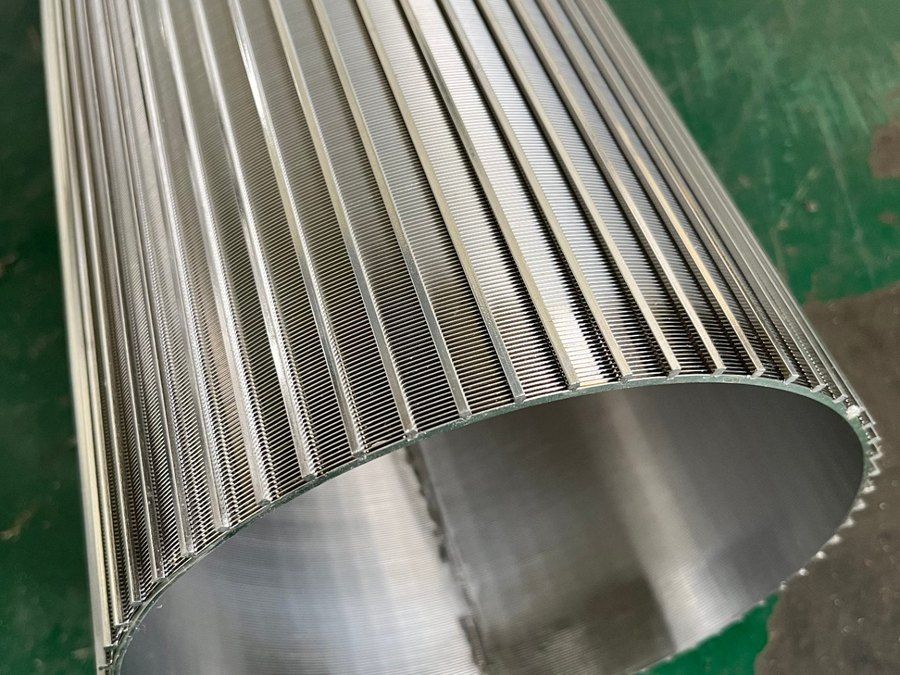
Perforated-plus-mesh baskets fail at the joint between layers: mesh tears against the perforation burrs, and the debris that went through the tear then blocks the sheet behind it. A wedge wire element has no second layer, no joint, no burrs — the slot is the cut point, the wire face is the wear surface, and back-flushing works because the opening widens inward. Fibrous and stringy duties (pulp, seaweed, textile waste, hair-like biomass) are where the difference shows fastest.
Drop-in or to drawing
Elements are supplied drop-in to standard Y-strainer, simplex and duplex housing sizes (with lift handle, seating lip and drain-plug clearance matched), or to drawing for proprietary housings — the seating face and the handle take-off matter as much as the slot, because a basket that rattles in its seat wears the lip and bypasses. Conical bottoms suit vertical housings; flat bottoms with a drain sump suit horizontal ones.
Specifications
| Slot | 0.2–3.0 mm at the flow face |
|---|---|
| Size | Basket OD 50–600 mm, depth to 900 mm |
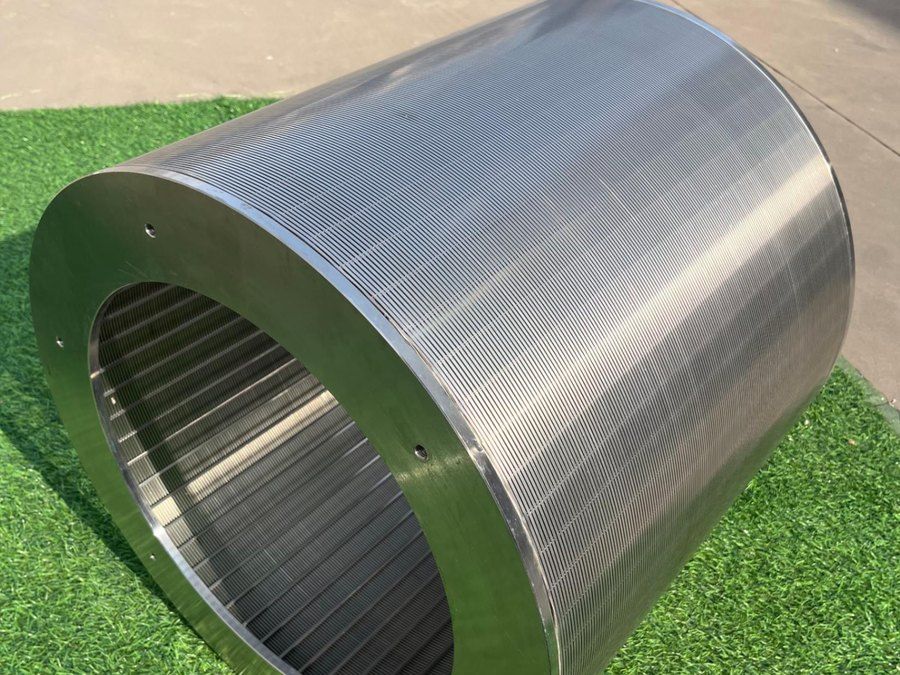
| Construction | One-piece welded V-wire on rods; no mesh liner |
| Bottom | Flat with sump, or conical, to housing |
| Options | Lift handle, seating lip, drain plug, DP tap, custom housing fit |
| Material | 304 / 316L / 2205 duplex |
The self-clearing geometry is the same across the family: fine elements on the filter elements page, vessel internals on the nozzle strainers page. Send the housing model or the basket drawing, the slot and the medium, and the quote will include the open area at that slot rather than just the price.
Related products
Ready to start your project?
Send us your drawing or sample — we reply within 24 hours on working days.