Home/Products/Profile Wire/Profile Wire for Filters
Profile Wire for Filters
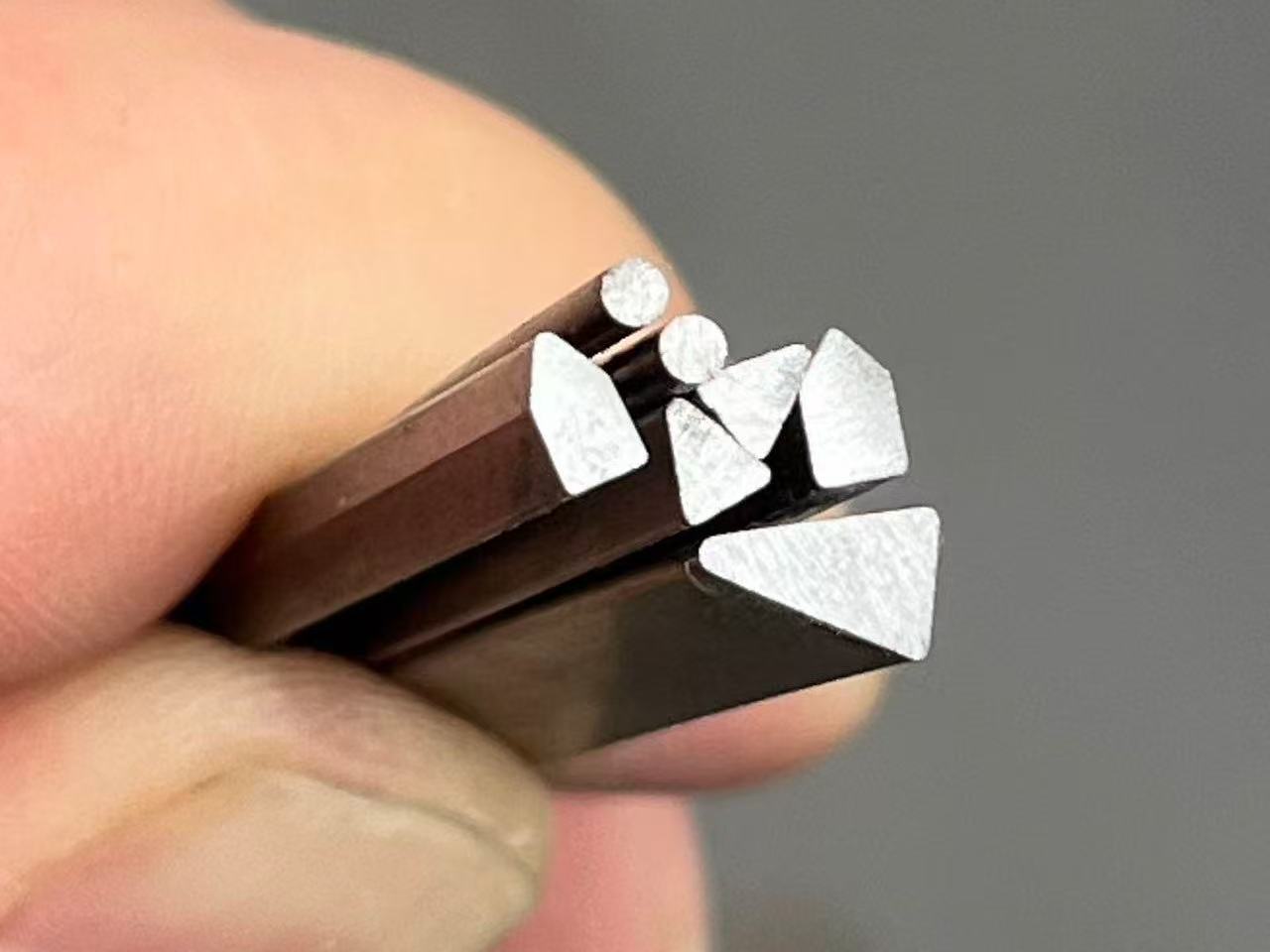
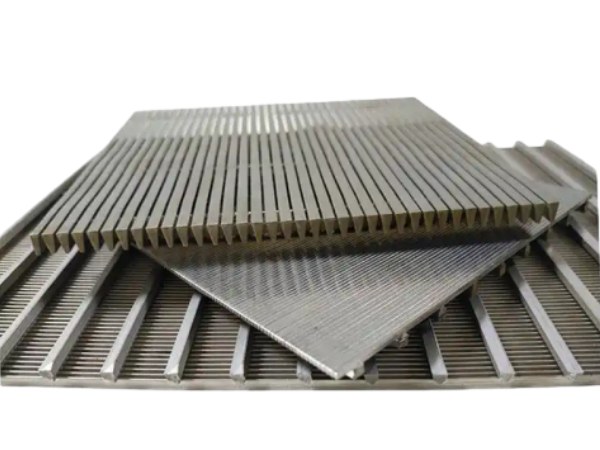
Profile wire wound and welded into filter elements. The slot is set by the wire pitch, so it holds a 20 micron opening over the whole length of the element and cleans in backwash.
Profile Wire for Filters
Profile wire wound and welded into filter elements. The slot is set by the wire pitch, so it holds a 20 micron opening over the whole length of the element and cleans in backwash.
| Material | 304 / 316L stainless steel, 2205 duplex on request |
|---|---|
| Size range | Slot 0.02-3.0 mm, wire face 0.7-4.0 mm, height 1.0-8.0 mm, element OD 20-600 mm |
| Typical application | Filter cartridges, basket strainers, candle filters, curved screen decks |
| Cross-section | Square — also drawn to your drawing |
| Surface | Bright drawn, as required |
| Packing | Coil, spool or straight length |
Filtration splits into two families and the wire only serves one of them. Depth media — sintered mesh, melt-blown cartridges, sand beds — trap particles inside their thickness. Profile wire is the other kind: a surface filter, where the particle stops on the face of the screen and nothing goes into the material. That single difference decides everything downstream, because a surface filter can be cleaned and put back into service, while a depth cartridge is consumed.
The slot on a profile wire element is the gap between two adjacent wires, set by the pitch of the winding and fixed by the wire section. It does not depend on a punched hole holding its shape, and it does not depend on a weave staying square. On a 600 mm long cartridge the opening at one end is the opening at the other, which is the property that makes the element predictable in service.
Why not perforated plate
Perforated plate is the obvious alternative and it runs out of room quickly. A punched round hole bottoms out around 0.3 mm in practical production — below that the punch breaks and the sheet distorts. At 0.3 mm on a reasonable pitch you are already below 30 % open area, and every hole is an individual event whose size depends on how worn the tool is. Profile wire reaches 20 micron slots and holds them along the full length of the element, with open area that stays workable because the slot can be long and narrow instead of round.
Three numbers that set the element
Slot width is the cut point. It should come from the particle size you must retain, not from a catalogue habit — a slot set too close to the median particle size blinds even on clean duty.
Wire face width sets the depth of the slot channel. A wider face makes a longer, narrower passage. That is good for wear and for catching elongated particles, and bad for throughput, because long fibres bridge across the channel instead of passing. Fine filtration usually runs a lighter face; abrasive duty runs heavier.
Wire height is stiffness. The longer the element and the higher the differential pressure, the more the wire needs to resist bowing between support rods. A bowed wire closes the slot on the pressure side and opens it on the other — the element stops being a filter with a known cut point.
Forms, and what changes between them
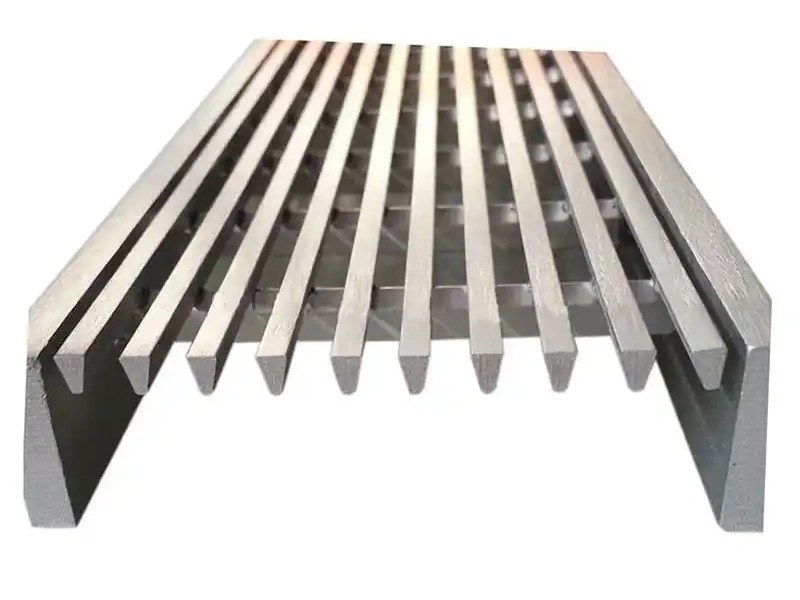
The same wire becomes a cartridge when it is wound onto a perforated core and welded to support rods, a basket when it is wound into a cylinder with a flange, a candle when the element is long and slender with a closed end, and a deck when it is laid flat and welded instead of wound. The wire does not change. The support structure, the end fittings and the flow direction do — and those are what the drawing has to show.
Material
304 covers general water and process duty. 316L is the default for chemical service and for anything food or pharmaceutical, where the element is also electropolished and built without crevices that hold residue. 2205 duplex comes in where chlorides would pit 316L — seawater, brine, some cooling circuits.
Specifications
| Material | 304 / 316L stainless steel, 2205 duplex on request |
|---|---|
| Slot width | 0.02–3.0 mm |
| Profile wire | V / wedge profile, face 0.7–4.0 mm, height 1.0–8.0 mm |
| Element diameter | 20–600 mm |
| Element length | Up to 3000 mm |
| Support structure | Perforated core, axial rods, or both |
| End fittings | Flange, threaded, open end, closed end, per drawing |
| Surface | Mill finish, pickled, or electropolished for food grade |
| Use | Filter cartridges, basket strainers, candle filters, screen decks |
The wire sections themselves are on the V-profile 2.5 × 4 mm and round-edge profile wire pages. If you are working out the opening, the slot calculation walks through it. For an element, send the flow rate, the particle to retain and the housing size — the geometry follows from those three.
Related products
Ready to start your project?
Send us your drawing or sample — we reply within 24 hours on working days.