Home/Products/Wedge Wire/Wedge Wire Filter Elements
Wedge Wire Filter Elements
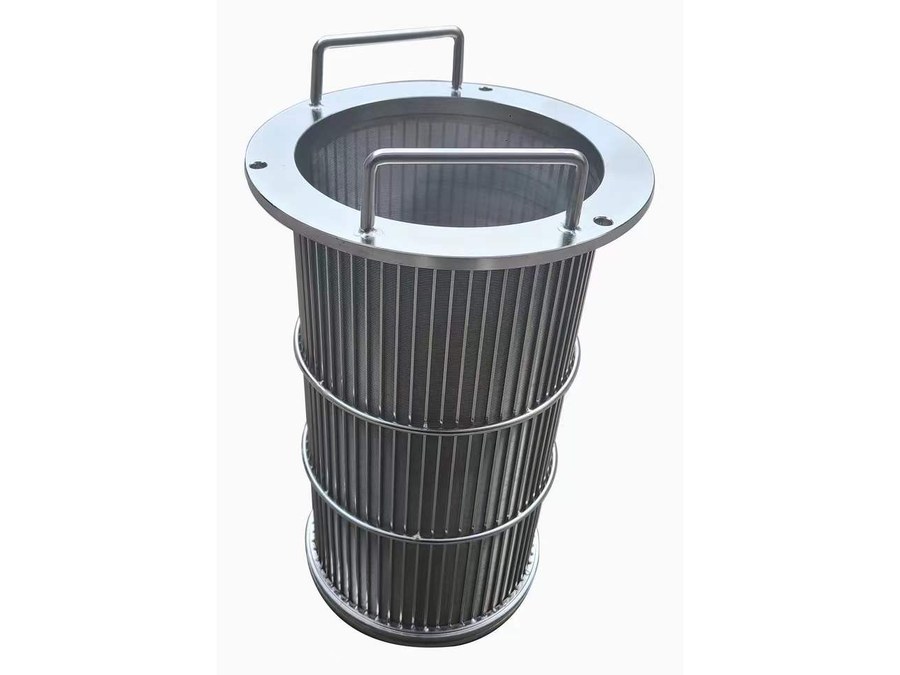
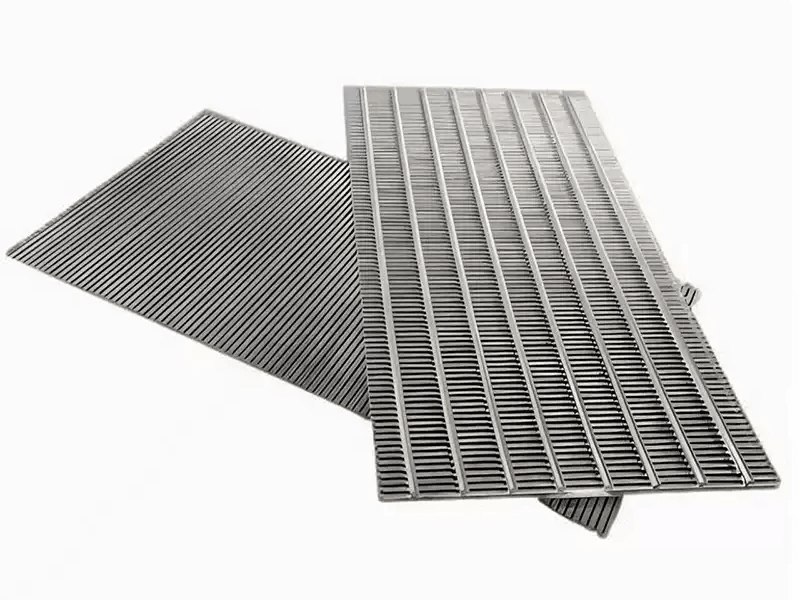
Filter elements built to be washed, not replaced: a wedge wire surface that sheds instead of plugs, cleaned in place with reverse flow, every part in the same alloy. Supplied as finished assemblies for filter OEMs and process plants.
Wedge Wire Filter Elements
Filter elements built to be washed, not replaced: a wedge wire surface that sheds instead of plugs, cleaned in place with reverse flow, every part in the same alloy. Supplied as finished assemblies for filter OEMs and process plants.
| Material | 304 / 316L / 2205 duplex / C276; tie rods, end caps and couplings in the same alloy |
|---|---|
| Size range | Candle elements 40-150 mm OD; baskets, leaves and discs built to drawing; slot 0.05-2.0 mm; flanged, threaded or tie-rod assemblies; backwash rated |
| Typical application | Candle and leaf filters, backwashable filter cartridges, catalyst retention, polymer and resin filtration, sugar and starch duty, filter OEM assemblies |
| Cross-section | Square — also drawn to your drawing |
| Surface | Bright drawn, as required |
| Packing | Coil, spool or straight length |
A wedge wire filter element is a component somebody else installs: filter OEMs build housings around them, process plants hold them as wear parts. What both are buying is the same property — a filtration surface that survives backwashing. A woven or sintered cartridge degrades with every reverse-flow cycle; a welded wedge wire element is cleaned in place, season after season, which is the whole economic argument and the subject of the wedge wire versus woven mesh comparison.
Built as an assembly, not a wound tube
An element is more than its screening surface. Tie rods hold the wrap under tension; end caps and couplings carry it into the filter plate; on candles, the drainage core inside matters as much as the surface outside, because backwash has to travel the same path in reverse. We build the assembly as one part — surface, core, rods, caps — with every wetted piece in the same alloy, so the element does not grow a corrosion cell at its own welds.
Sizing the slot to the duty
Fine duty — catalyst powder, resin beads, sugar liquor — runs slots of 0.05–0.2 mm, and at that width the surface design matters more than anywhere else: bar width, rod count and core geometry trade against each other quickly. Coarser duty — media retention, polymer prefilter — runs 0.2–2.0 mm and the conversation shifts to throughput. Either way the slot is quoted with the open area it actually delivers; the arithmetic is in the slot calculation article.
Specifications
| Candle OD | 40–150 mm, any length |
|---|---|
| Baskets / leaves / discs | Built to drawing, flat or formed |
| Slot | 0.05–2.0 mm at the filtration face |
| Connections | Flanged, threaded or tie-rod mounted to your plates |
| Backwash | Rated for reverse flow at line pressure |
| Materials | 304, 316L, 2205, C276 — all wetted parts matched |
Elements draw on the same wrapped construction as our screen cylinders and the material range on the wedge wire range page. Send the element type, slot, connection and duty, and the quote will include the core design we would build for backwash — the part that decides whether the element actually survives being cleaned.
Related products
Ready to start your project?
Send us your drawing or sample — we reply within 24 hours on working days.