Home/Products/Profile Wire/Trapezoidal Wire
Trapezoidal Wire
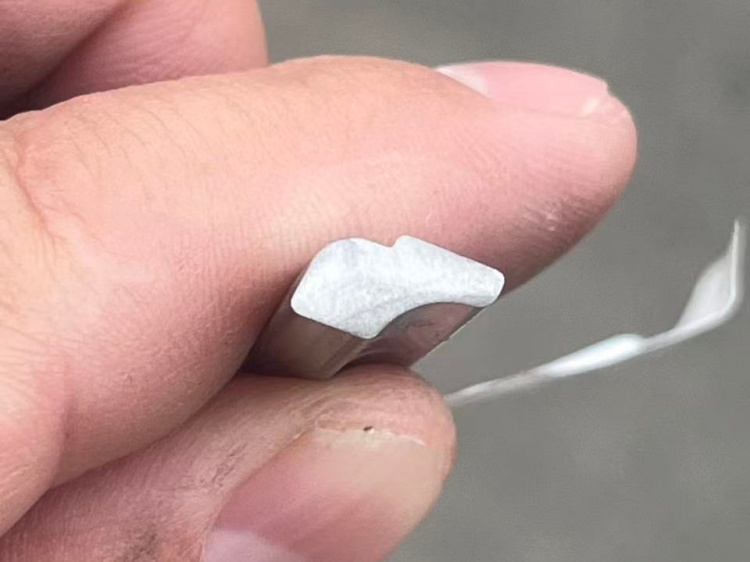
A four-sided section with one face wider than the other: the taper locks, aligns or spreads load. Sits between a triangle and a rectangle in behaviour and price.
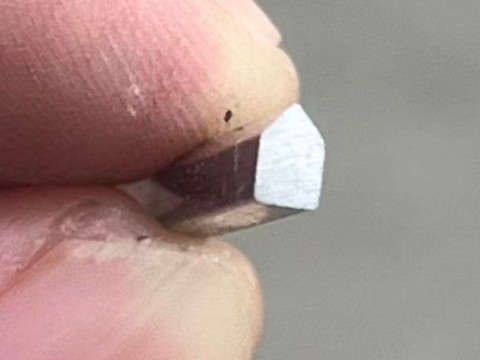
Trapezoidal Wire
A four-sided section with one face wider than the other: the taper locks, aligns or spreads load. Sits between a triangle and a rectangle in behaviour and price.
| Material | 304 / 316L / 430 stainless steel; copper and aluminium on request |
|---|---|
| Size range | Top width 1.0-8.0 mm, bottom width to drawing, height 1.0-10 mm; tolerance from +/-0.03 mm |
| Typical application | Locking rings, self-aligning tracks, wedge wire alternatives, concrete and precast reinforcement, screen decks |
| Cross-section | Square — also drawn to your drawing |
| Surface | Bright drawn, as required |
| Packing | Coil, spool or straight length |
Trapezoidal wire is a four-sided section with unequal parallel faces — narrow on top, wider on the bottom, or the reverse. That single taper does three useful things: it locks, it aligns, and it spreads load. Everything specific about the section follows from which of the three you need.
What the taper buys
It locks. Wound into a ring, a tapered section seats against its neighbour and cannot be pushed through: the assembly tightens under load instead of loosening. That is why trapezoidal wire appears in locking rings, retaining hoops and filter elements that must hold their diameter under pressure.
It self-aligns. Running in a matching groove, the taper finds centre. A rectangular section in the same groove rattles until the clearance is taken up; a trapezoid centres itself as soon as it is loaded. Guide rails and track inserts use this to keep a part from wandering.
It spreads load and sheds material. A wide base on a narrow top puts more bearing area where the force arrives and less metal where it does not — the same logic as an I-beam in one dimension. On screen decks and precast reinforcement, that means stiffness per kilo rather than stiffness per section.
Trapezoid vs triangle vs wedge wire
The three are often confused because all of them taper. The difference is what the taper is for:
- Triangular wire (V-profile) forms a slot: apex out, the opening widens outward so particles cannot wedge. Its job is filtration.
- Trapezoidal wire is a truncated triangle: the top is flat, not a point. It carries load and locks, but the flat top means it does not form a sharp slot edge.
- Wedge wire is the screen-specific name for the V family, including the K and trapezoidal variants used in screen construction.
If you are choosing between them for a screen, the slot edge decides, and V, K or trapezoid walks through that choice. For non-screen parts, the trapezoid is almost always the locking/aligning one.
How it is specified
Four numbers: top width, bottom width, height, corner radius. The taper angle follows from the first three, so it does not need a separate callout — but say which face is the locating face. A trapezoid quoted upside down is a different part with the same dimensions, and it is a classic first-sample rejection.
Corner radii matter more than buyers expect. Sharp corners hold tolerance and wear the die; broken corners extend die life and change how the section seats in a groove. If the part is going into a groove, tell us the groove geometry and the radius follows. Precision shaped wire covers how tolerance and radius calls land in the quote.
How it is drawn
Trapezoid sections are drawn through a shaped die from round or from a rolled preform; the wider the base relative to the top, the more the preform matters. Very wide flats with a narrow top are close to a rectangle in drawing behaviour, which is good news for stability and bad news for locking. A pronounced taper is more useful and slightly harder to hold straight — reduction is uneven across the section, so the wire tends to drift toward the heavy side, and straightening has to correct it.
Specifications
| Section | Trapezoid, unequal parallel faces; sharp or broken corners |
|---|---|
| Top width | 1.0–8.0 mm typical |
| Height | 1.0–10 mm |
| Material | 304 / 316L / 430 stainless; copper and aluminium on request |
| Tolerance | From ±0.03 mm on widths and height |
| Supply | Coil, spool, cut lengths, or formed rings on request |
| Use | Locking rings, self-aligning tracks, screen decks, reinforcement |
Shown with the rest of the family in the profile wire sections catalogue, and available in the profile wire range. Send the four numbers and mark the locating face — the taper and the die follow from them.
Related products
Ready to start your project?
Send us your drawing or sample — we reply within 24 hours on working days.