Home/Products/Profile Wire/Profile Wire Sections
Profile Wire Sections
A working catalogue of profile wire cross-sections: what each one is for, the size range it is practical in, and where the full drawing lives on this site.
Profile Wire Sections
A working catalogue of profile wire cross-sections: what each one is for, the size range it is practical in, and where the full drawing lives on this site.
| Material | 304 / 316L / 430 stainless steel; copper and aluminium on request |
|---|---|
| Size range | Section 0.5-12 mm circumscribed circle; triangular, flat, square, half-round, trapezoid, T, asymmetric |
| Typical application | Screens, filters, seal carriers, guide rails, terminals, trim and machine parts |
| Cross-section | Square — also drawn to your drawing |
| Surface | Bright drawn, as required |
| Packing | Coil, spool or straight length |
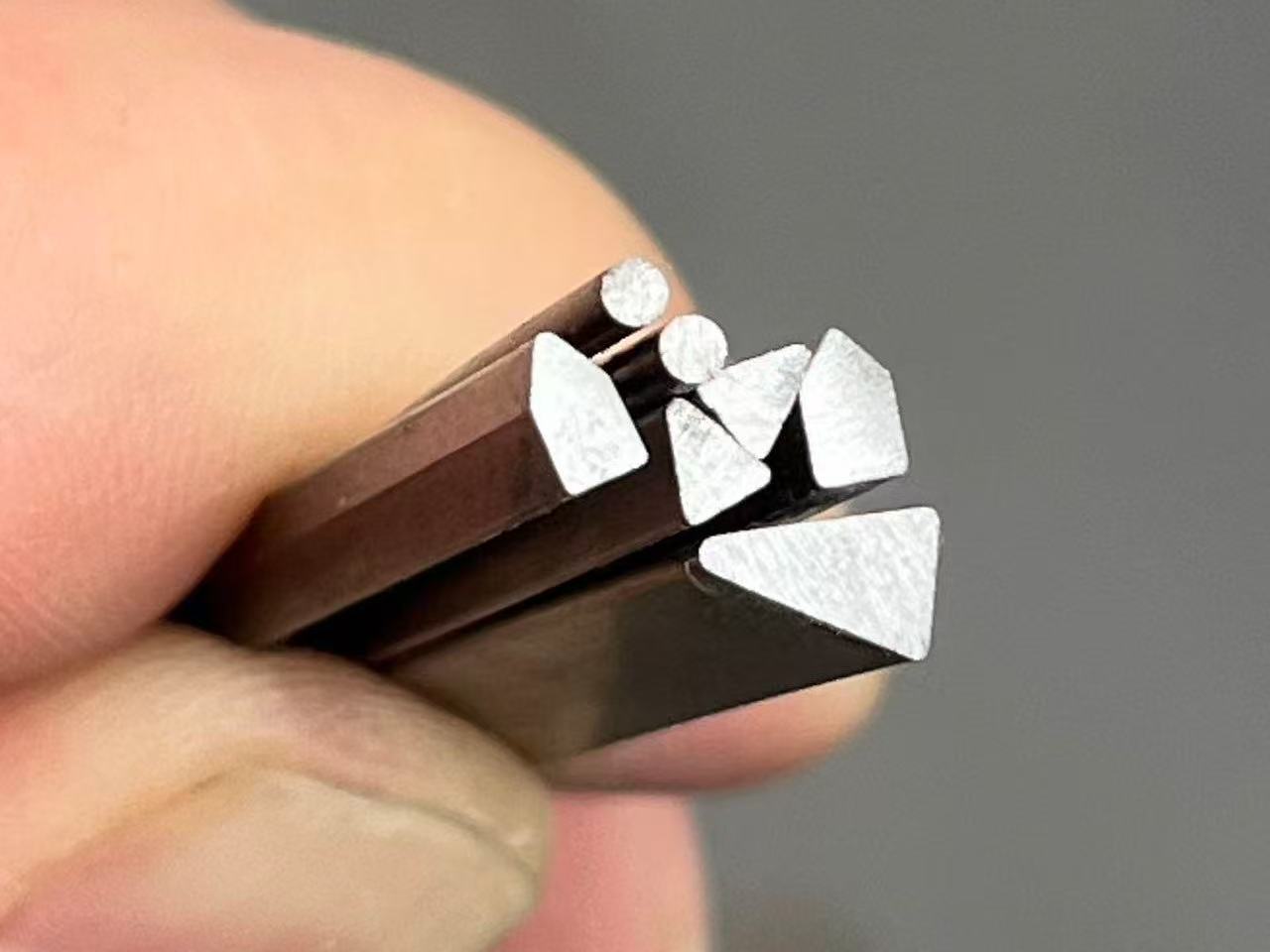
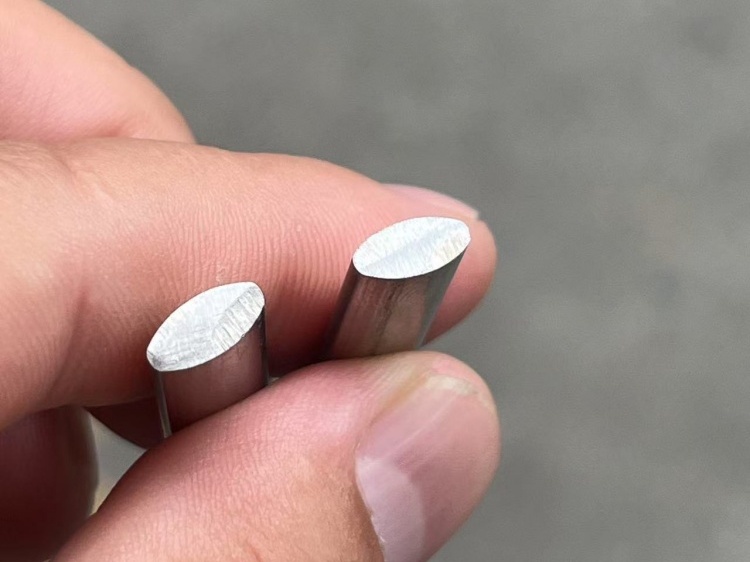
Profile wire is wire drawn to a cross-section instead of a round gauge. The section is the product — everything else (material, tolerance, surface) hangs off it. This page is the working catalogue: every section we draw regularly, what it is actually for, and the size range where it stops making sense. If your section is not on the list, it is still worth sending — the list is what we draw often, not the limit of the dies we can cut.
Triangular wire
A triangle with one sharp apex and a flat base. Its job is to make a slot that widens outward: wound with the apex out, particles pass through the narrow inside gap and cannot wedge in it. This is the section for wedge wire screens, oil screens and any surface filter that has to survive backwash. Practical from about 1.8 × 2.7 mm up to 8 mm height; below that the apex gets fragile, above it the slot is needlessly coarse. The current sizes are on the 1.8 × 2.7 mm, 2.0 mm, 3.0 mm and 3 × 5 mm pages, and the reasoning behind the shape is in why screens use triangular wire.
Flat wire
A rectangle, usually width several times the height. Flat wire carries load in one plane: wear strips, guide rails, springs where height is the working dimension, and edge protection. It is the cheapest section to draw because the die is simple, and the easiest to tolerance because the two faces carry the function. Our range example is the 10 × 2 mm stainless flat wire.
Square wire
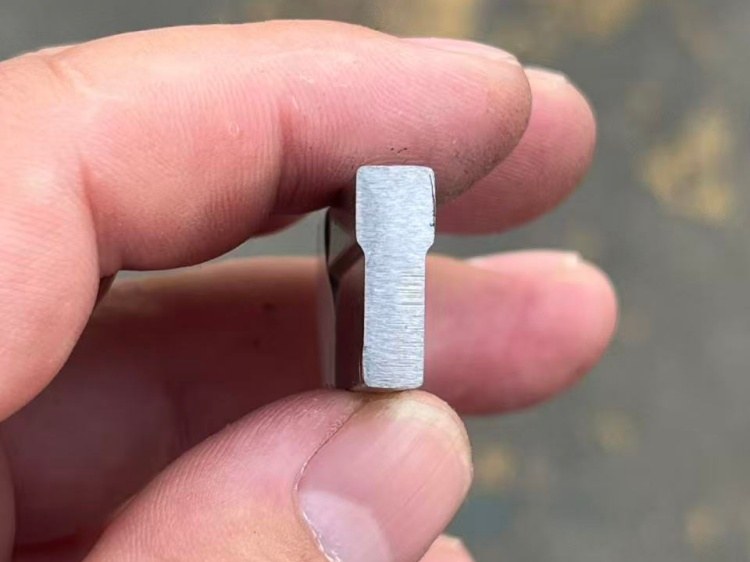
Equal sides, sharp or lightly rounded corners. Square section goes where a pin or a key would go: fasteners, inserts, textile guides. It machines predictably and it orients predictably. See the 4 × 4 mm stainless square wire page.
Half-round wire
A semicircle on a flat. One face is a bearing surface, the other is flat for welding or clamping. Half-round appears in ornament, edge trim and in mechanical parts that slide on the curved face. It is also the section machinists ask for most when they are replacing a milled profile with wire.
Trapezoidal wire
A trapezoid, wider on one face. Wound into a ring it locks by taper; laid in a track it self-aligns. Trapezoid is the section between a triangle and a rectangle — some slot-forming ability, more stiffness than a triangle of the same height.
T-profile wire
A stem and a head. The head rides in a groove, the stem carries the load, which is exactly how the T-bar page uses it. T sections replace a machined rail in one drawing pass.
Asymmetric and special sections
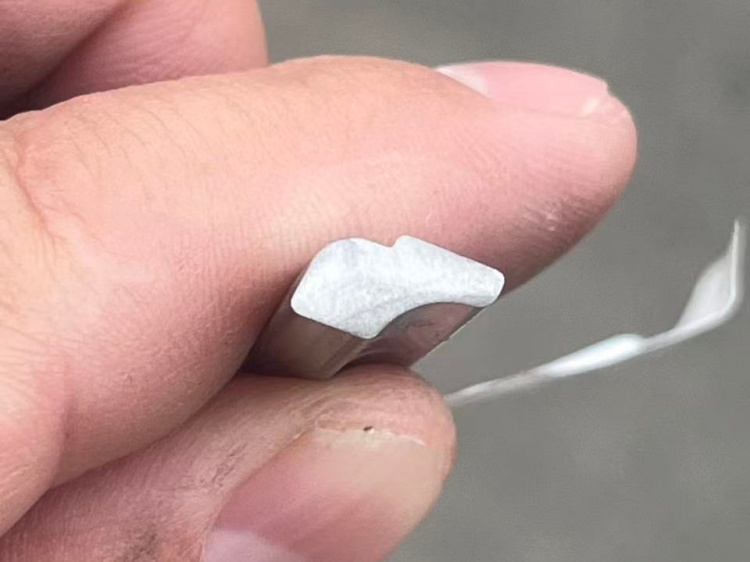
Everything that is deliberately not symmetric: one flat face and one ramp, a hook, a step, a key. The asymmetry does a job — prevents wrong assembly, locks into a groove, seals one way. That family is on the asymmetric profile wire page, and the jobs asymmetry does are listed there.
How to read the size
We quote sections by their cross-section dimensions and circumscribed circle, not by gauge number. The circumscribed circle — the smallest circle that contains the section — tells you instantly whether a die and a pass schedule exist in your size. Practical range for most sections is 0.5–12 mm; outside that, rolls and drawing are combined and the minimum quantity changes. Why sections, not gauge explains the logic.
What each section changes in the quote
Sharp corners hold tolerance and cost die life. Rounded corners extend die life and change the fit. Tolerance on the functional faces costs more than tolerance everywhere — better to ask for ±0.02 mm on the face that mates and leave the rest commercial. The full logic is in profile wire vs shaped wire.
Specifications
| Sections | Triangular, flat, square, half-round, trapezoid, T, asymmetric, custom |
|---|---|
| Size range | 0.5–12 mm circumscribed circle (larger by roll + draw) |
| Material | 304 / 316L / 430 stainless steel; copper and aluminium on request |
| Tolerance | Commercial or from ±0.02 mm on functional faces |
| Surface | Bright-drawn, bright-annealed, pickled |
| Supply | Coil, spool, or cut and deburred lengths |
| Drawings | Every section with dimensions on the drawings page |
Browse the range under profile wire and shaped wire, or send your section drawing and we will tell you which family it falls in.
Related products
Ready to start your project?
Send us your drawing or sample — we reply within 24 hours on working days.