Home/Products/Wedge Wire/Sieve Bend Screens
Sieve Bend Screens
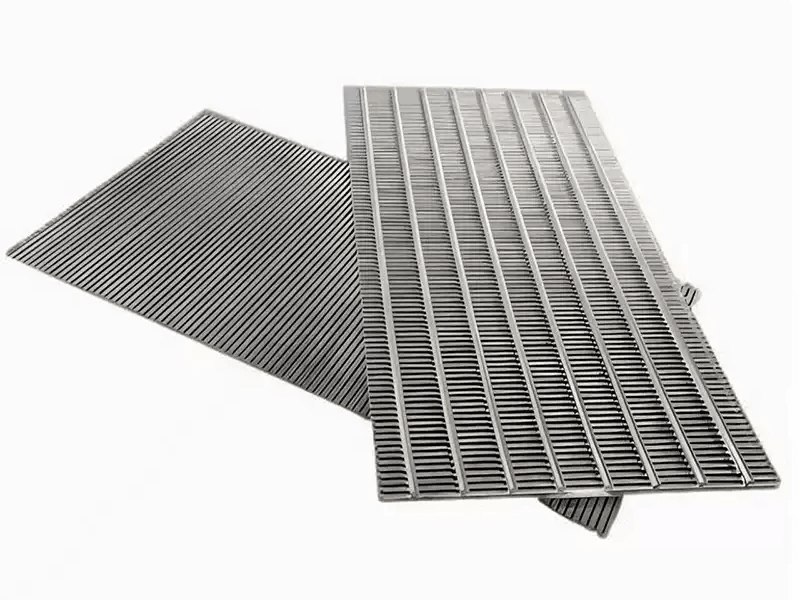
Static curved screens that separate solids by geometry instead of power: slurry flows over a wedge wire arc, thin slices peel off between bars, and the curve itself does the dewatering. No moving parts, no cloth, nothing to blind.
Sieve Bend Screens
Static curved screens that separate solids by geometry instead of power: slurry flows over a wedge wire arc, thin slices peel off between bars, and the curve itself does the dewatering. No moving parts, no cloth, nothing to blind.
| Material | 304 / 316L / 2205 duplex; 202B and 809C for abrasive coal duty |
|---|---|
| Size range | Arc 45 or 60 degrees, radius 750-2000 mm, bar spacing 0.25-3.0 mm, panel width to 2500 mm; bar orientation across the flow |
| Typical application | Coal preparation dewatering and desliming, mineral sizing ahead of mills, starch and grain processing, effluent solids capture |
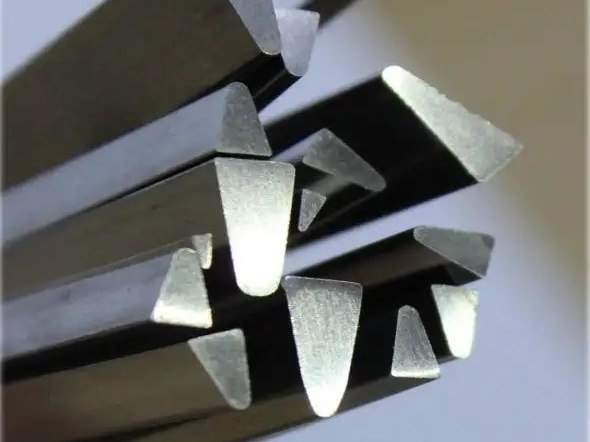
| Cross-section | Square — also drawn to your drawing |
| Surface | Bright drawn, as required |
| Packing | Coil, spool or straight length |
A sieve bend is the simplest screening machine in a coal prep plant: a curved wedge wire panel with no moving parts, no power and no cloth. Slurry is fed tangentially onto the top of the arc, flows down as a thin film, and each bar slices off a layer of liquid and fines that passes through; the oversized solids ride over the surface and discharge off the bottom lip. The screen does nothing but sit at the right angle and present the right gap — the separation comes from the geometry, which is why a worn panel is the only failure mode it really has.
Why the bars run across the flow
On a sieve bend the wedge wire bars are set perpendicular to the flow, spaced by the slot width. The streaming film is sheared at every bar, which does two things at once: it forces the liquid through the slot, and it keeps the slot self-clearing — grains that approach the gap are swept by the film instead of settling into it. This is the wedge geometry from every wedge wire screen doing its work continuously, and it is why a sieve bend rarely blinds where a woven panel of the same aperture would cake over within a shift.
The two numbers that size the panel
Bar spacing sets the cut point. Separation happens near the slot size, biased fine — a 0.5 mm spacing on a dewatering bend passes most particles below roughly 0.3 mm. Coal plants run 0.25–1.0 mm for dewatering and desliming duty; mineral sizing ahead of mills goes coarser. Angle sets the split. A 45-degree arc dewateres harder over its shorter length; a 60-degree arc gives a drier cake on the overflow because the film spends longer on the screen. Feed box design matters as much as either number: the slurry must arrive as an even film across the full panel width, or the dry side of the panel blinds while the wet side passes fines it should have caught.
Wear: the whole economics of the panel
A sieve bend's life is measured at the bar tops, where the film accelerates over each bar. Abrasive coal and ore duty eats ordinary stainless there first — which is why the wear alloys earn their place on this product specifically: 202B and 809C work-harden at the bar tops and outlast 304 several times in fresh-water coal slurry, while chloride-bearing or acidic effluents belong to 2205 duplex or, on acid duty, C276. The trade-off logic is the same as on flat mining screens and is worked through in the abrasion-or-corrosion decision tree.
Replaceable segments, not disposable panels
Because wear concentrates in the middle of the arc where most of the flow runs, we build larger bends as segmented panels: the centre segments wear first and are swapped without replacing the whole frame. Slot spacing, arc radius and segment width are matched to the original installation so a retrofit panel drops into an existing feed box.
Specifications
| Arc | 45° or 60°, custom angles on request |
|---|---|
| Radius | 750–2000 mm |
| Bar spacing | 0.25–3.0 mm, measured across the slot |
| Panel width | To 2500 mm; multi-segment for wider feed boxes |
| Materials | 304, 316L, 2205 duplex; 202B / 809C for abrasive duty |
| Ends | Hooked edges for spring-loaded mounting, bolted frames, or per your housing |
Sieve bends share their wire and support construction with our flat screen panels and the heavy duty is covered on wedge wire mining screens. Send the feed rate, solids size distribution and slurry solids content, and the quote will include the angle and spacing we would run on that duty — not just the panel size.
Related products
Ready to start your project?
Send us your drawing or sample — we reply within 24 hours on working days.