Home/Products/Wedge Wire/Wire Wrapped Sand Control Screens
Wire Wrapped Sand Control Screens
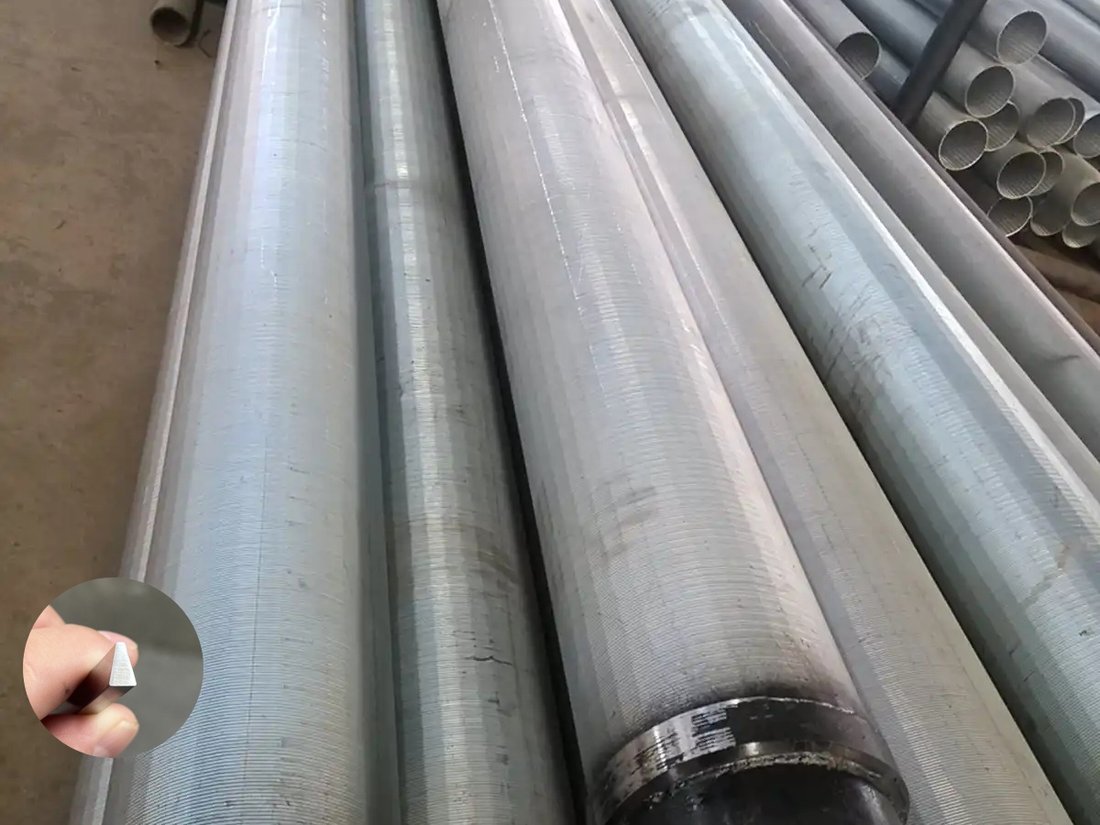
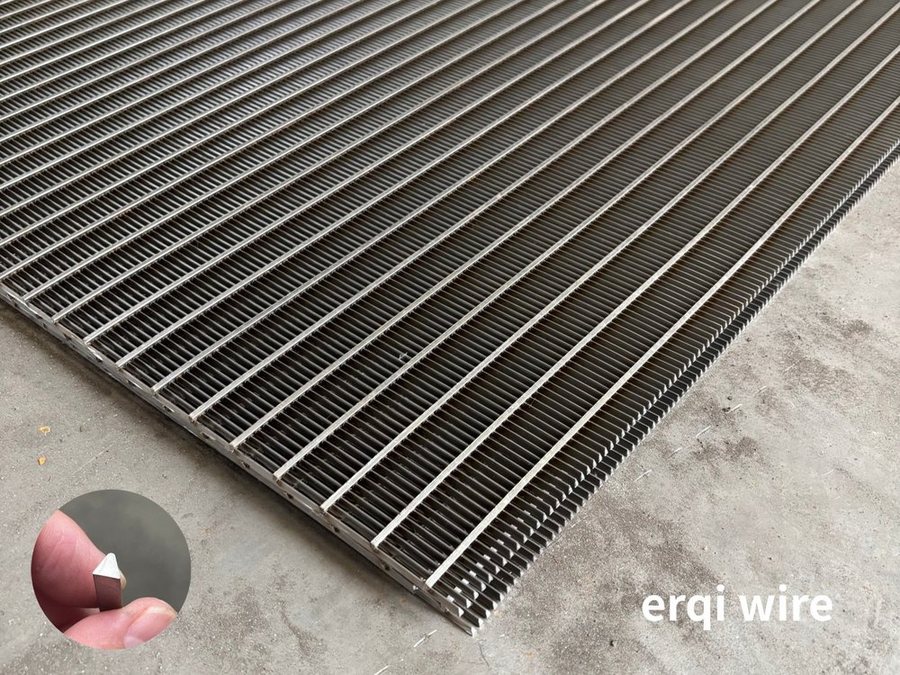
Continuous V-wire wrapped and welded around a perforated base pipe, slot by slot, no loose wire anywhere on the jacket. Gauge measured at the outside face and held to +/-0.05 mm so the slot you order is the slot you get.
Wire Wrapped Sand Control Screens
Continuous V-wire wrapped and welded around a perforated base pipe, slot by slot, no loose wire anywhere on the jacket. Gauge measured at the outside face and held to +/-0.05 mm so the slot you order is the slot you get.
| Material | 304L / 316L / 2205 / 2507 duplex / C276; wrap wire triangular V-profile 0.75-3 mm |
|---|---|
| Size range | OD 60-178 mm (2 3/8"-7"), slot 0.15-0.50 mm, gauge +/-0.05 mm, continuous all-welded wrap on perforated base pipe |
| Typical application | Oil well sand control, cased-hole and open-hole completions, water injection wells, gas wells producing sand, heavy-oil thermal wells |
| Cross-section | Square — also drawn to your drawing |
| Surface | Bright drawn, as required |
| Packing | Coil, spool or straight length |
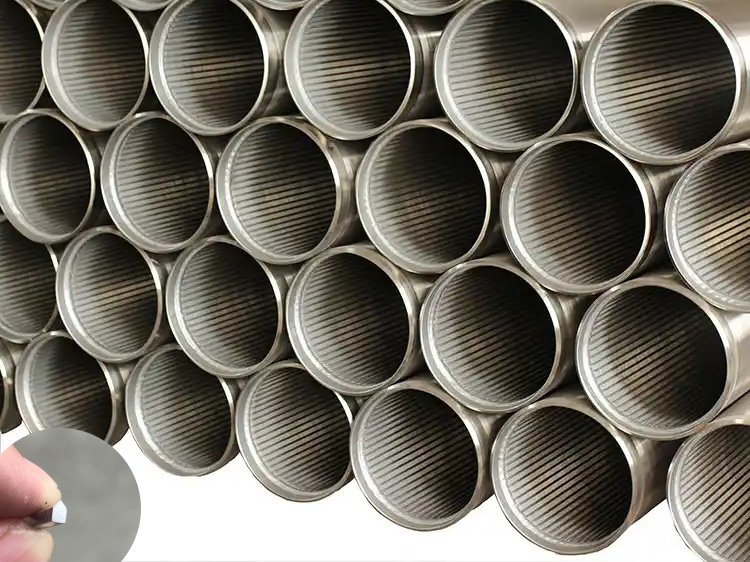
A wire wrapped screen is the simplest sand control device in a well: a triangular V-wire wound helically around a perforated base pipe, welded to axial support bars at every crossing, with no solder, no resin and no cloth anywhere on the jacket. The slot is the gap between adjacent wire turns, held open by the geometry of the wire itself. Everything else on this page follows from that construction.
Why the V-profile does the work
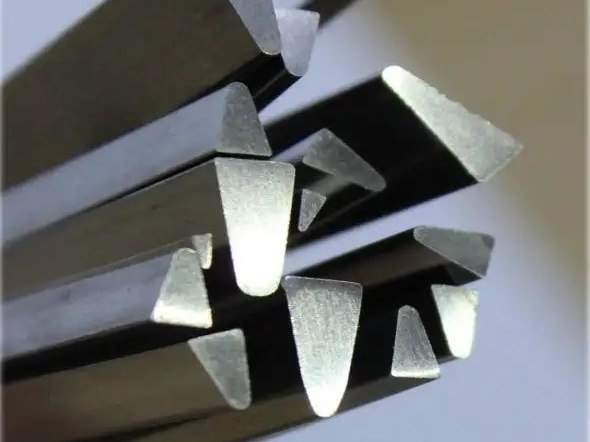
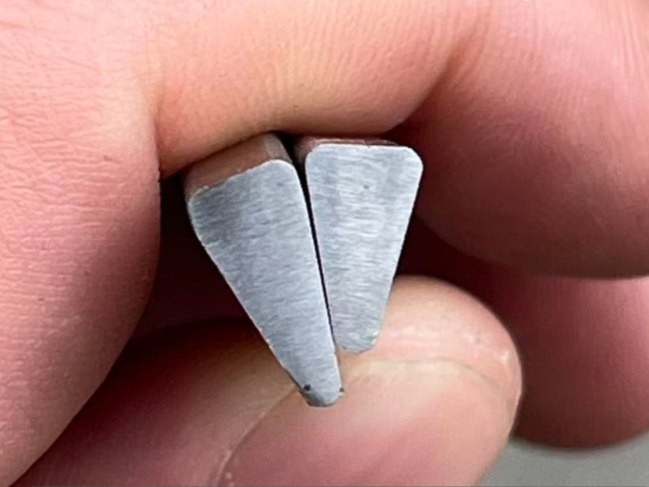
The slot is narrow at the outside face of the screen and widens inward. Sand entering the slot narrows to the outside gap and either stops there, or flows through and exits the widening side. It cannot lodge at its own size and plug the slot from inside, which is what happens with slotted pipe and mesh liners: a grain that fits the cut keeps fitting it, builds a bridge, and the screen blinding follows. This is the same self-clearing wedge that makes all wedge wire screens resistant to blinding, and it is why screen wrap is always triangular wire, never round — the reason comes down to one contact line versus one contact point.
Construction, and what we hold tight
Wrap wire is drawn in-house from the same heats as our other profiles: 0.75–3 mm triangular section, tensile and straightness checked per coil. The wrap is continuous around the full jacket length, resistance-welded to each support bar, and the finished screen is gauge-checked slot by slot along the wrap.
| Base pipe | Perforated casing 2 3/8"–7" OD (60–178 mm); perforation pattern to your spec |
|---|---|
| Wrap wire | Triangular V-profile 0.75–3 mm, same grade as screen body |
| Slot | 0.15–0.50 mm typical for sand control; measured at the outside face |
| Gauge tolerance | +/-0.05 mm on the outside gap, verified per slot |
| Ends | Threaded (BTC/LTC/blank), welded flange, or plain per completion design |
| Length | Single joints or full-tubing-length assemblies |
The gauge point is worth dwelling on. A slot specified 0.20 mm is a sand-retention decision, not a preference: if the delivered jacket averages 0.25 because the wrap tension drifted, the screen passes what it was supposed to stop, and the failure shows up downhole as produced sand, not as an invoice dispute. We measure the outside gap on the wound screen, not the wire height on a drawing.
Slot and material choices link to the well, not to a catalogue
Slot sizing starts from the formation sand analysis — the method is in the slot size article. Material follows the well chemistry: 304L covers most onshore water duty; 316L handles brine at moderate temperature; deep, hot or chloride-heavy wells move to 2205 or 2507 duplex, where roughly 2.5 times the yield of 316L becomes collapse margin at the same wall; sour and acidizing service pushes to C276, and the whole wetted assembly has to match — a noble wrap on a lesser support is an anode waiting to be consumed, as the alloy decision tree explains.
For gravel-packed completions the same construction carries larger slots matched to the gravel — that variant is on the gravel pack screens page. And if the well is a water well rather than an oil well, the water well comparison covers the same physics at lower pressures.
Before you order
Send the sand analysis (sieve or laser, with D10/D50/D90), the casing size and thread, and the well depth with bottom-hole temperature. If the well is sour or gets acidized, say so — it changes the material before it changes anything else. Enquiries with the sand report attached get a slot recommendation, not a price list.
Related products
Ready to start your project?
Send us your drawing or sample — we reply within 24 hours on working days.