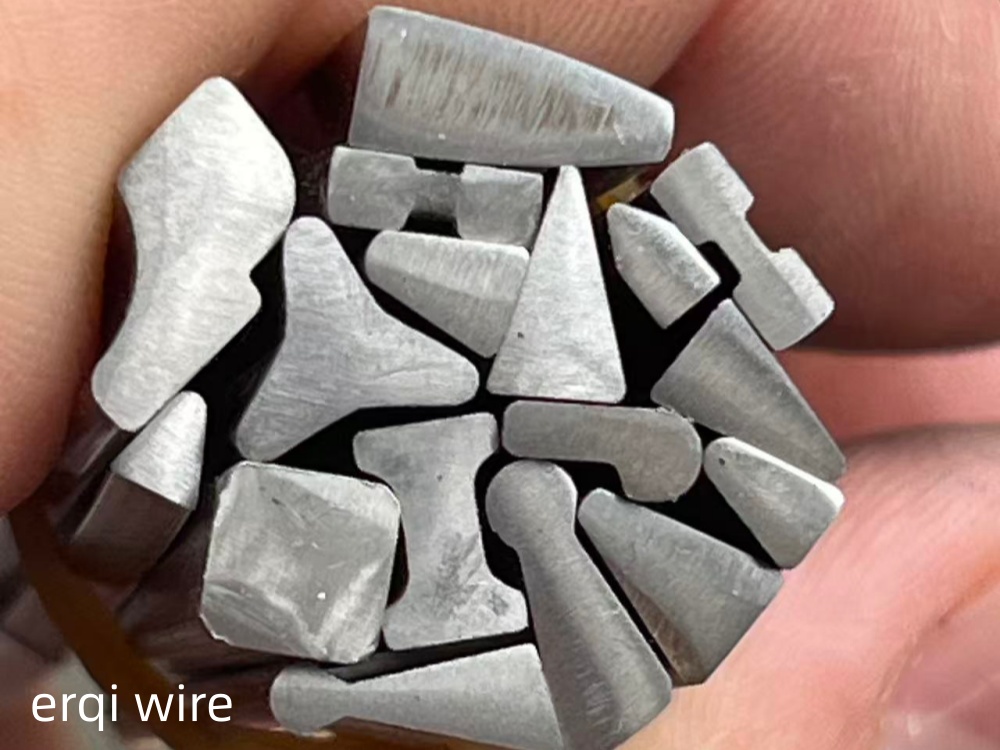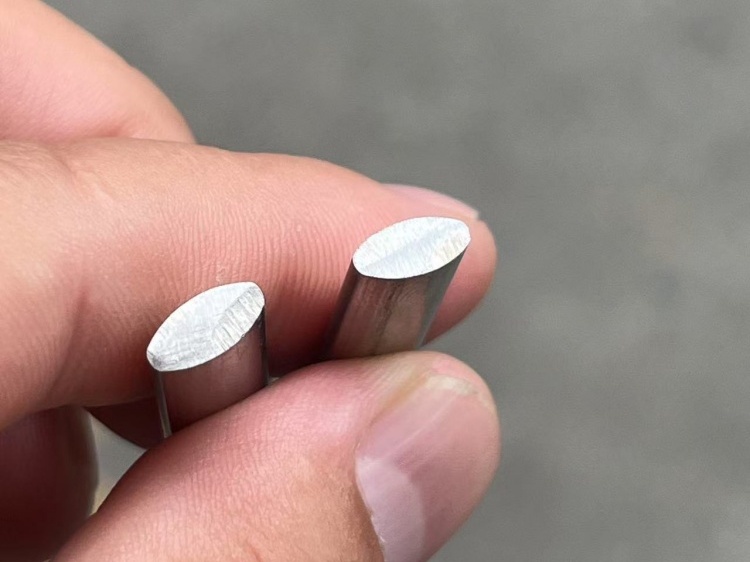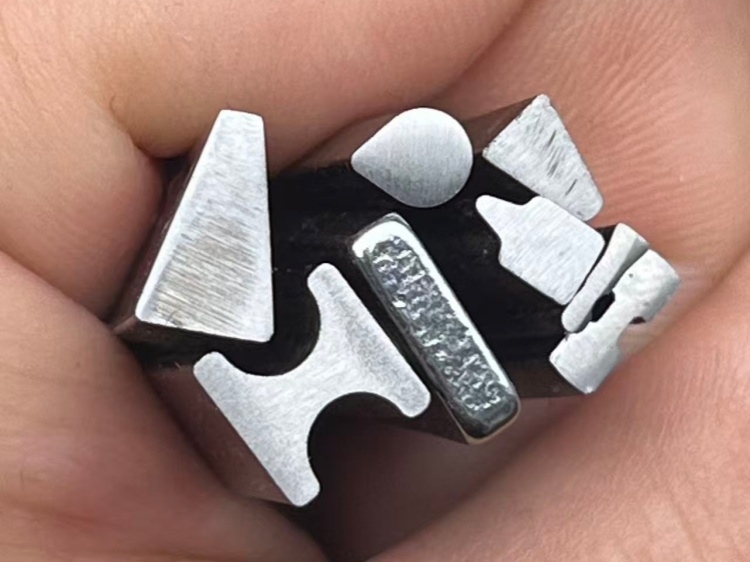
If you work with wire products, filtration systems, springs, industrial components, or precision metal parts, you may have come across the term "profile wire."
Profile wire is metal wire manufactured with a specific cross-sectional shape instead of the traditional round section. The shape can be simple—flat, square, or rectangular—or more specialized, such as triangular, wedge-shaped, trapezoidal, or a custom profile made to a customer's drawing. The profile is usually designed for a particular purpose: it may improve contact between components, create a controlled opening, fit into a specific space, or provide a combination of strength and dimensional accuracy that standard round wire cannot achieve.
Profile wire is another common term for shaped wire or shaped metal wire. The main difference from standard wire is the cross-section: a standard wire has a circular section, while profile wire has a non-round cross-section formed to meet a specific dimensional requirement.
Depending on the application, a profile wire may be manufactured as:
The exact profile can be symmetrical or asymmetrical, and may include special angles, grooves, radii, or other features shown on an engineering drawing.
The main reason is simple: the shape can be designed around the application. Round wire is convenient and widely available, but its circular geometry is not always suitable for a finished component. A customer may need a wire that:
In these situations, changing the wire profile can make the overall design simpler—instead of machining a round wire into a special shape after production, it is often more practical to manufacture the required profile directly.
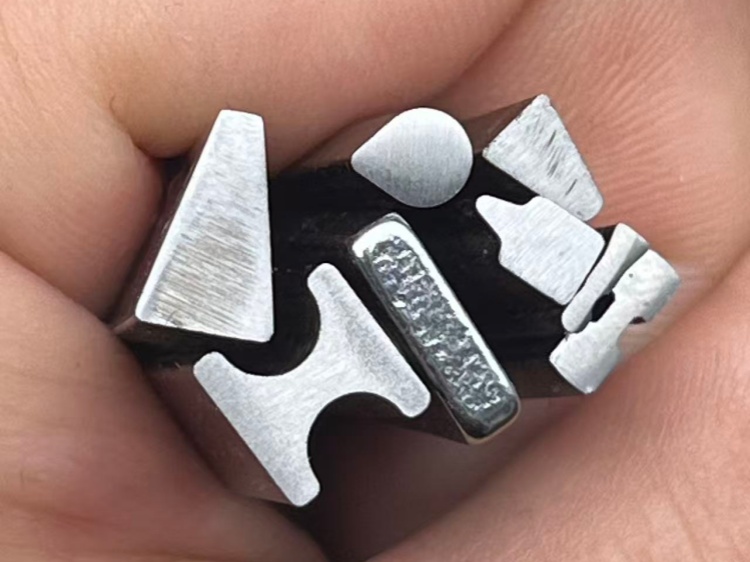
Flat wire has a wider and thinner cross-section than round wire. It is often used where a broad contact surface is needed or installation space is limited. Applications include springs, clips, retaining parts, electrical components, and automotive parts, with width and thickness adjusted to the finished product.
Square wire has four flat sides and is useful where stable positioning and contact are required. Its geometry can reduce rotation and provide a predictable contact surface. Typical uses include springs, mechanical parts, tools, fasteners, and fabricated components.
Rectangular wire is similar to square wire but with different width and height. This gives designers more control over the relationship between available space, contact area, and material cross-section. It is used in springs, rings, electrical components, and mechanical assemblies where specific dimensions are required.
Triangular wire—also called triangle wire or V-shaped wire—has a triangular cross-section and is commonly used in filtration and screening. Its geometry forms controlled openings when wires are arranged next to each other, so it is found in wedge wire screens, well screens, water filtration systems, and industrial screening products.
Wedge wire has a tapered profile and is widely associated with screening and filtration. It can create a controlled slot opening between adjacent wires and, combined with support rods and welded into a rigid structure, is used in water treatment, well screens, industrial filtration, separation equipment, and intake screens.
Not every application fits a standard profile. When the customer already has a drawing showing the required cross-section, the wire is manufactured specifically for that product. A custom profile may include unusual angles, different wall thicknesses, grooves, radii, or an asymmetrical shape—particularly useful for OEM and industrial customers.
Profile wire can be manufactured from different metals depending on the working environment and performance requirements.
Stainless steel is one of the most common choices for profile wire, especially where corrosion resistance matters. Common grades include 304, 316, and 316L, selected according to environment, temperature, chemical exposure, strength, and operating conditions. It is widely used for filtration equipment, well screens, water treatment, industrial machinery, chemical and food processing equipment, screening systems, and general corrosion-resistant components.
Carbon steel can be selected when mechanical strength and cost are important. It is used for mechanical components, springs, structural parts, and various industrial products, with the grade and condition chosen for the finished application.
For applications involving repeated loading or elastic deformation, spring steel can be used in flat, square, rectangular, and other profile sections. The material and profile must be matched to the required spring performance.
Depending on the application, profile wire can also be produced from specialty materials and alloys. The material should always be considered together with the required shape, dimensions, manufacturing process, and order quantity.
Filtration is one of the most important areas for profile wire. Triangular wire and wedge wire manufacture screening surfaces with controlled openings—wedge wire screens, wire-wrapped screens, well screens, water intake screens, industrial filter elements, water treatment equipment, and separation systems. In these products the wire profile is directly related to the final opening and screen structure.
Profile wire is used in various screening and filtration products for oil and gas equipment. The material and profile may need to withstand demanding conditions, so corrosion resistance, mechanical properties, dimensions, and manufacturing consistency all need to be considered.
Water treatment equipment often requires durable screening components with controlled openings. Stainless steel triangular and wedge profile wires are suitable for many water filtration and screening applications where corrosion resistance and dimensional consistency matter.
Flat, square, rectangular, and custom profile wires are used for springs, clips, retainers, guides, and other mechanical parts. The advantage is that the cross-section can be designed around the actual component.
Certain electrical and electronic components require a specific shape rather than a circular section. Flat or rectangular wire can provide a defined contact area or fit within a compact design, and material selection is especially important when conductivity or corrosion resistance is part of the requirement.
The terms "profile wire" and "shaped wire" are often used to describe the same general type of product; the terminology can vary between industries and manufacturers. "Shaped wire" emphasizes that the wire has been formed into a non-round shape, while "profile wire" emphasizes the cross-sectional profile. For example, the same product may be called triangular shaped wire or triangular profile wire, wedge shaped wire or wedge profile wire, and a custom section may be described as custom shaped wire or custom profile wire. For industrial buyers, the exact terminology matters less than the actual dimensions, material, tolerance, and application.
The process depends on the material and the required profile. A typical route includes wire preparation, profiling, sizing, inspection, and final coiling or straightening, using cold rolling, drawing, forming, sizing, or a combination of processes. For custom profile wire, dimensional control is particularly important—the manufacturer may need to control width, height, corner radius, angles, cross-sectional geometry, surface condition, straightness, dimensional tolerances, and batch-to-batch consistency.
Yes. Custom profile wire is commonly produced according to an engineering drawing, sample, or customer specification. A useful drawing should include the main cross-sectional dimensions and any critical tolerances—for example material grade, overall width and height, angles, corner radius, dimensional tolerance, surface requirements, and coil or straight-length requirements. The more complete the specification, the easier it is for the manufacturer to evaluate the process and quote accurately. A sample can also help when a drawing is not available.
Selection should start with the finished product rather than the wire alone. Useful questions include: what shape is required; what material will work in the application; what dimensions and tolerances are necessary; will the wire be supplied in coils or straight lengths; how will the customer process it; what working environment will it face; what quantity is required; and what surface condition is acceptable. These details determine whether a standard profile is suitable or a custom profile needs to be developed.
Profile wire is metal wire manufactured with a specific non-round cross-sectional shape. Common profiles include flat, square, rectangular, triangular, wedge, and custom sections.
The two terms are often used interchangeably. Both generally refer to wire with a non-round cross-section designed for a specific application.
Triangular profile wire is commonly used in screening and filtration products, including well screens, wedge wire screens, water treatment equipment, and industrial filter elements.
Yes. Stainless steel is widely used for profile wire, particularly in applications where corrosion resistance is important.
Yes. Custom profile wire can be manufactured according to a customer's drawing, sample, dimensions, material, and tolerance requirements.
A cross-sectional drawing or sample, material grade, dimensions, tolerances, surface requirements, quantity, delivery form, and final application are useful when requesting a quotation.
Profile wire is metal wire manufactured with a specific cross-sectional shape to meet the requirements of a particular product or production process. Flat, square, rectangular, triangular, wedge, and custom profiles are used across filtration, water treatment, mechanical, automotive, electrical, and industrial components. The right profile depends on the relationship between shape, material, dimensions, tolerance, manufacturing process, and final application—and for non-standard requirements, working from a drawing or sample is usually the most practical way to develop a suitable profile.
This article is prepared by the technical team at Hubei ERQI New Materials Co., Ltd. We manufacture stainless profile wire, shaped wire and wedge wire—including triangular, flat, square, rectangular and fully custom sections—in materials such as 304, 316L and 2205 duplex, made to your drawing and tolerance.
Related products:
Email: info@erqiwire.com · Website: erqiwire.com — send us your drawing or sample to discuss a suitable production solution.
Contact: Kevin
Phone: +8613669008985
Whatsapp:+8613669008985
Email: info@erqiwire.com
Address: Xiangyang, Hubei Province, China
Web:erqiwire.com