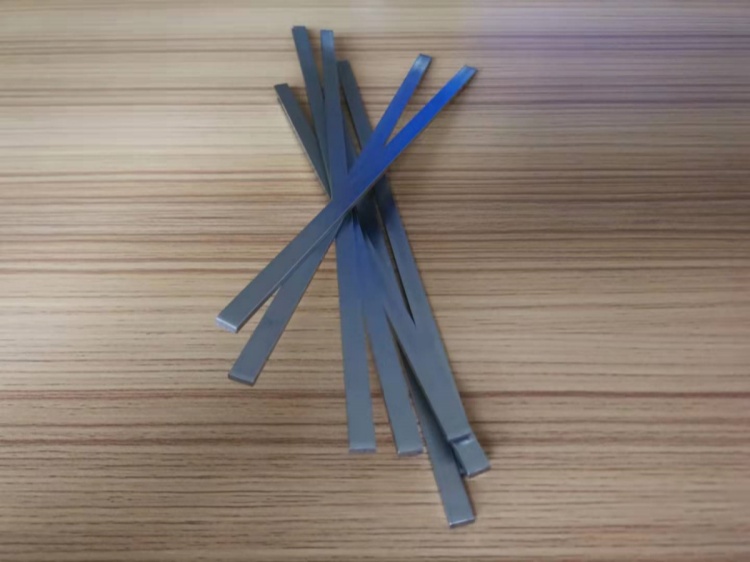
Filtration is not only about choosing the right filter medium. The shape of the wire used to build the filter can also strongly affect slot opening, flow, strength, and overall screen performance—which is why profile wire is widely used in industrial filtration and screening. Profile wire for filtration is metal wire made with a specific cross-sectional shape for filter elements, screen tubes, panels, well screens, and other separation equipment. The most common profiles are triangular and wedge wire, but other shapes can also be produced for special requirements. For filter manufacturers, the wire must do more than meet a nominal size: the profile, material, dimensions, tolerance, surface condition, and production consistency all need to match the final application.
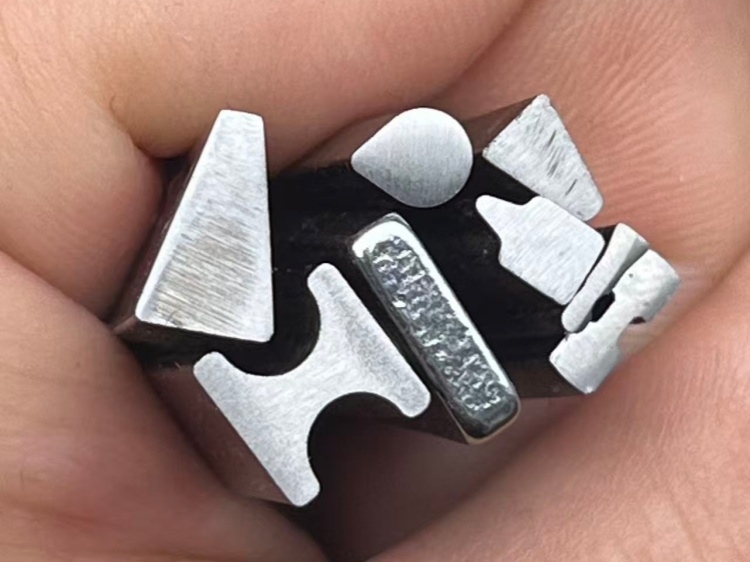
Profile wire for filtration is shaped metal wire used to create the filtering surface of a screen or filter element. Unlike ordinary round wire, it has a controlled cross section; when a number of profile wires are arranged together, the gaps between them form the openings through which liquid, gas, or fine solids pass. In many industrial screen designs the profile wire is welded to support rods or other structural parts to form a rigid filtration surface, so the wire profile is an integral part of the filtration design. A typical filtration profile may be triangular, V-shaped, wedge-shaped, flat, rectangular, or fully custom.
A filtration system must separate one material from another while keeping enough flow and mechanical strength. A well-designed profile wire can deliver a controlled opening and a stable screen structure, and unlike a conventional woven mesh it can be built around a specific slot opening and support arrangement. Benefits include:
Actual performance depends on the complete screen design—profile, slot size, support rods, material, flow conditions, and operating environment.
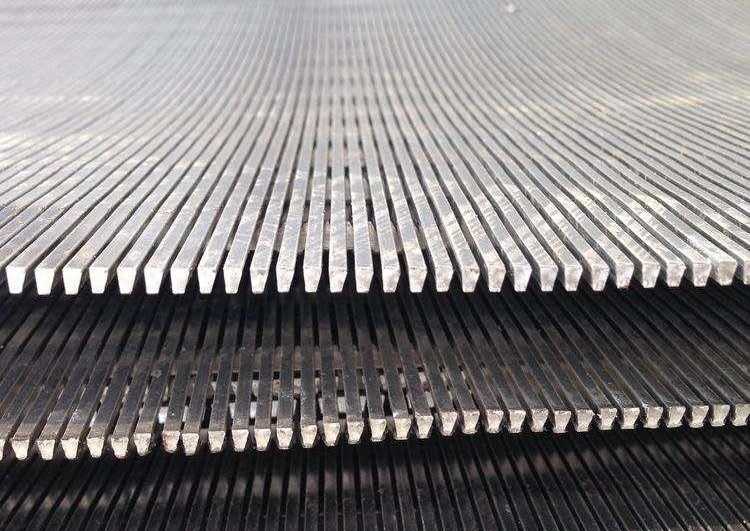
Triangular wire—also called V-shaped or triangle wire—is one of the most common filtration profiles. Its three-sided cross section is well suited to continuous-slot screening: when wires sit side by side, the spaces between them become the filtration slots. It is used for well screens, wedge wire screens, water filtration screens, intake screens, industrial filter elements, and separation equipment. For screen makers, the triangular wire dimensions must be carefully matched to the required slot size and support structure.
Wedge wire is the other widely used term for the profile in many continuous-slot filtration products. Its tapered shape creates a slot that opens toward the inside of the screen, which is one reason wedge wire screens are chosen where controlled particle separation and resistance to blockage matter. It can be used in cylindrical screens, flat panels, baskets, and other filter structures—applications include water and wastewater treatment, well water filtration, industrial process filtration, mining and mineral processing, food processing, oil and gas equipment, and liquid-solid separation. The wire is only one part of the finished screen; slot opening, support rod arrangement, welding, flow direction, and open area must all be considered in design.
Flat, rectangular, and custom profiles can also be produced for filtration when a special requirement calls for them—for example a non-standard slot geometry or a mating part. The suitable shape depends on the filtration process and the final filter design.
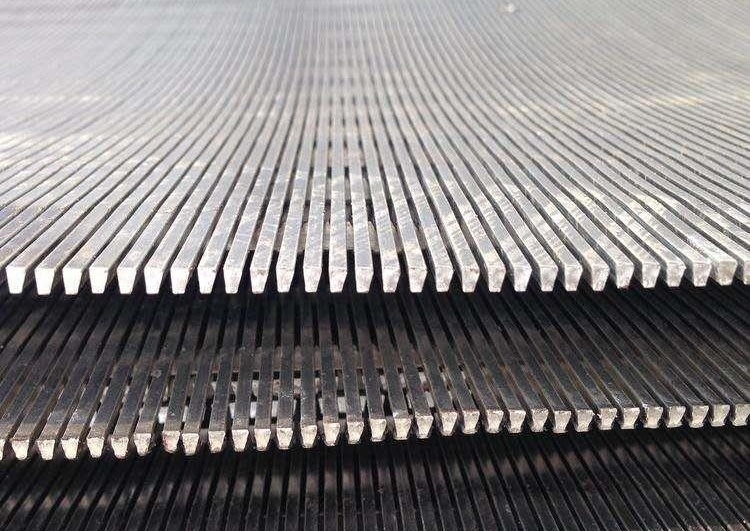
The cross-sectional shape has a direct relationship with how the filtration slots are formed. The most important parameter is the slot opening; in a wedge wire screen, the distance between adjacent profile wires sets the surface slot, which must stay consistent so the filtration process remains predictable. Other key factors:
Determines what particle size is retained or allowed through, based on the material being filtered and the separation target.
Affects how much fluid can pass; a good design balances filtration needs with the required flow rate.
Influences contact geometry, slot shape, structural behavior, and how particles interact with the screen surface.
Width and height affect the strength of the finished screen and the available filtration area.
The profile wire normally works with support rods or another structural system; the relationship between the two affects strength and stability.
Material selection is as important as profile selection. Filtration equipment may face water, chemicals, pressure, temperature, abrasive solids, or corrosive media, so the material must match the working environment.
One of the most common materials, in grades such as 304, 316, and 316L, suited to applications where corrosion resistance, strength, and long service life matter—water treatment, well screens, industrial filtration, chemical processing, food processing, liquid-solid separation, and general screening. The right grade should follow the actual environment rather than a one-size-fits-all choice.
Considered where a combination of strength and corrosion resistance is needed, in more demanding filtration environments where standard stainless grades are not enough. Selection should follow the actual operating conditions and customer specification.
Some systems run in highly corrosive or high-temperature environments; nickel alloys and other specialty materials may be considered based on the application and manufacturing capability. For custom projects, the material should always be evaluated together with the wire profile and production process.
One of the most common uses. Stainless triangular and wedge wires go into screening equipment for water wells, water treatment, wastewater treatment, and intake systems, in forms such as cylindrical screens, flat or curved panels, baskets, screen tubes, or custom elements. Corrosion resistance and consistent slot dimensions are especially important here.
A typical application. A wire-wrapped well screen uses profile wire arranged around support rods to create continuous openings, with slot size matched to the formation or filtration requirement. Stainless is often chosen for corrosion resistance and long-term durability; wire dimensions, slot opening, support rod size, winding process, and welding all need to be considered together.
Covers a wide range—process filtration, chemical filtration, food and beverage, mining, pulp and paper, slurry separation, dewatering, sand control, and industrial water treatment—where a standard mesh, perforated plate, or round-wire structure cannot give the needed combination of opening control, strength, and flow. Design should start from the characteristics of the material being separated.
Can place demanding requirements on filtration parts—pressure, corrosion, temperature, and mechanical loading. Profile wire fits screening and sand-control products that need a controlled opening and a strong supporting structure; material grade, profile dimensions, slot accuracy, and production consistency all matter.
For filtration profile wire, dimensional accuracy is not just a quality-check item—the wire dimensions affect the final slot opening and therefore filter performance. A small variation in width or profile geometry can shift the spacing between adjacent wires. Production may need to control wire width, height, profile geometry, corner radius, angles, surface condition, dimensional tolerance, and coil consistency, with the required tolerance set by the product and application.
Not every filtration system can use a standard wire size; sometimes a specific cross section is needed to match an existing screen design or production line. A custom profile can be developed from an engineering drawing, wire sample, cross-sectional dimensions, material specification, slot requirements, production method, and quantity—useful when market-standard sizes do not fit the equipment or requirement. For a new project, a cross-sectional drawing is the best starting point; for ordering, provide the profile drawing, material grade, wire width and height, required tolerance, slot opening, coil or straight-length requirement, estimated quantity, application, and any existing screen design. A sample helps when no drawing is available.
Choosing the right profile wire should begin with the filtration requirement: first determine the required slot opening and the particle to be retained, then consider:
What particle size must be retained?
How much liquid or gas must pass through the screen?
Is the filter exposed to corrosion, chemicals, high temperature, pressure, or abrasive solids?
Will the screen face vibration, pressure, impact, or heavy loading?
Will the profile wire be wound around support rods, welded into a flat panel, or used in another structure?
Which material gives the required corrosion resistance and mechanical performance?
How closely must the wire profile match the finished screen design?
These factors should be weighed together, not selected on size alone.
Manufacturing may involve cold rolling, drawing, forming, sizing, and other controlled processes depending on the profile and material, and must keep a stable cross-sectional shape over the required length. A typical sequence runs raw material → wire preparation → profile forming → sizing → dimensional inspection → surface inspection → coiling or straightening. The exact process depends on material, wire profile, size, tolerance, and final application.
The two are designed differently. Wire mesh relies on woven or welded wires to make openings; profile wire screens use shaped wires set at controlled spacing, and in wedge wire constructions the profile wire and support rods form a rigid structure with continuous slots. Neither is universally better—the correct choice depends on the filtration medium, required opening, mechanical needs, flow rate, and equipment design.
Shaped metal wire used to create the filtering surface of screens and filter elements, with common profiles including triangular and wedge wire.
Triangular and wedge profiles are widely used for screening and filtration because their geometry forms controlled openings between adjacent wires.
Stainless steel is common—grades such as 304, 316, and 316L—with other steels and specialty alloys chosen for specific environments.
Yes. It is widely used in water treatment, well screens, intake screens, and other water filtration applications.
Yes. Custom profile wire can be manufactured according to a drawing, sample, specified dimensions, material, and tolerance requirements.
Start from the filtration requirement—slot opening, flow rate, retained particle size, operating environment, mechanical strength, material, and screen construction.
Profile wire is an important component in many industrial filtration systems. The shape of the wire determines how the filtration openings are formed, while the material, dimensions, tolerance, and screen construction determine how the finished product performs in service. Triangular and wedge profiles are widely used in water treatment, well screens, industrial filtration, and separation equipment, and for special requirements profile wire can be made from a customer's drawing or sample. For filter manufacturers, the best results come from selecting the wire according to the complete screen design rather than choosing a standard size by a single dimension.
This article is prepared by the technical team at Hubei ERQI New Materials Co., Ltd. We manufacture stainless profile wire, shaped wire and wedge wire—including triangular, flat, square, rectangular and fully custom sections—in materials such as 304, 316L and 2205 duplex, made to your drawing and tolerance.
Related products:
Email: info@erqiwire.com · Website: erqiwire.com — send us your drawing or sample to discuss a suitable production solution.
Contact: Kevin
Phone: +8613669008985
Whatsapp:+8613669008985
Email: info@erqiwire.com
Address: Xiangyang, Hubei Province, China
Web:erqiwire.com