Home/Products/Wedge Wire/Gravel Pack Screens
Gravel Pack Screens
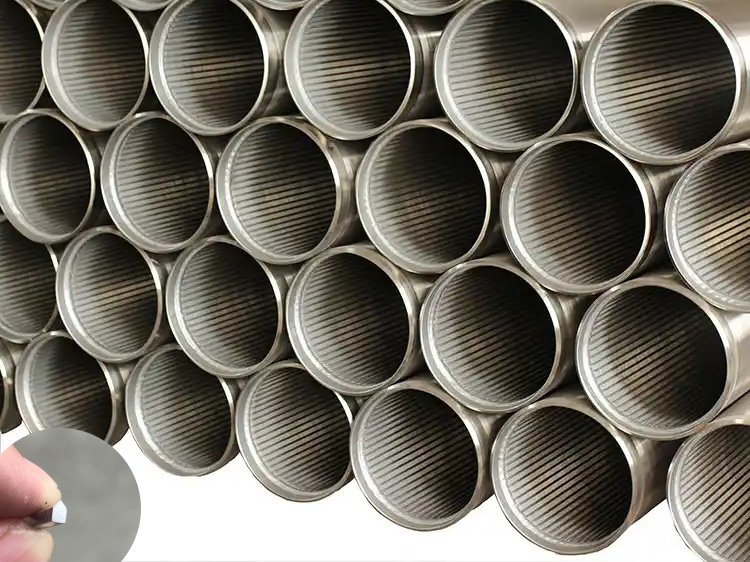
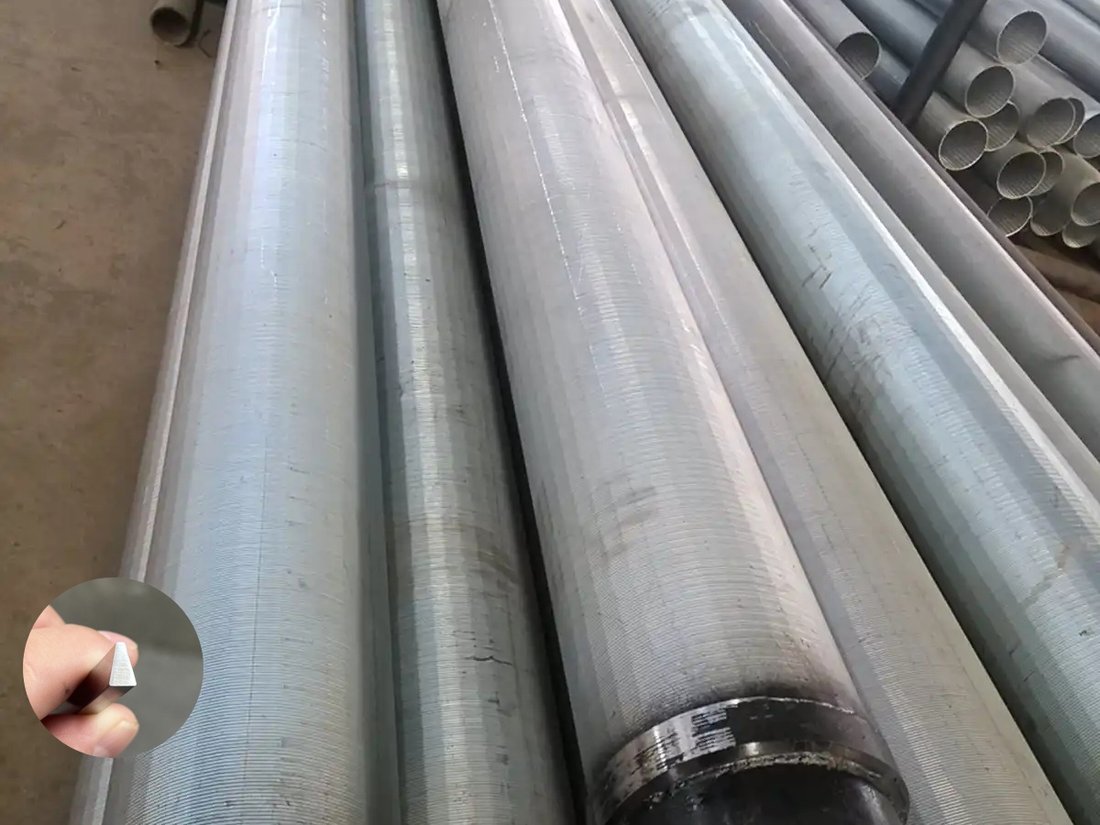
Wire wrapped screens built for gravel packing: the slot is sized to hold the gravel in place, not to stop formation sand directly, so slots run larger, profiles run heavier, and collapse margin is the number that matters.
Gravel Pack Screens
Wire wrapped screens built for gravel packing: the slot is sized to hold the gravel in place, not to stop formation sand directly, so slots run larger, profiles run heavier, and collapse margin is the number that matters.
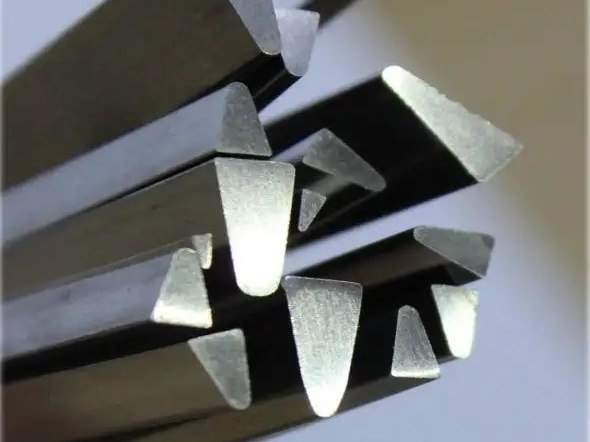
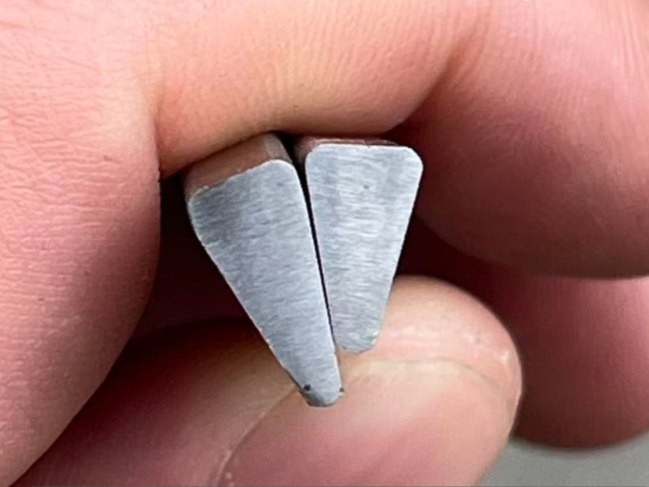
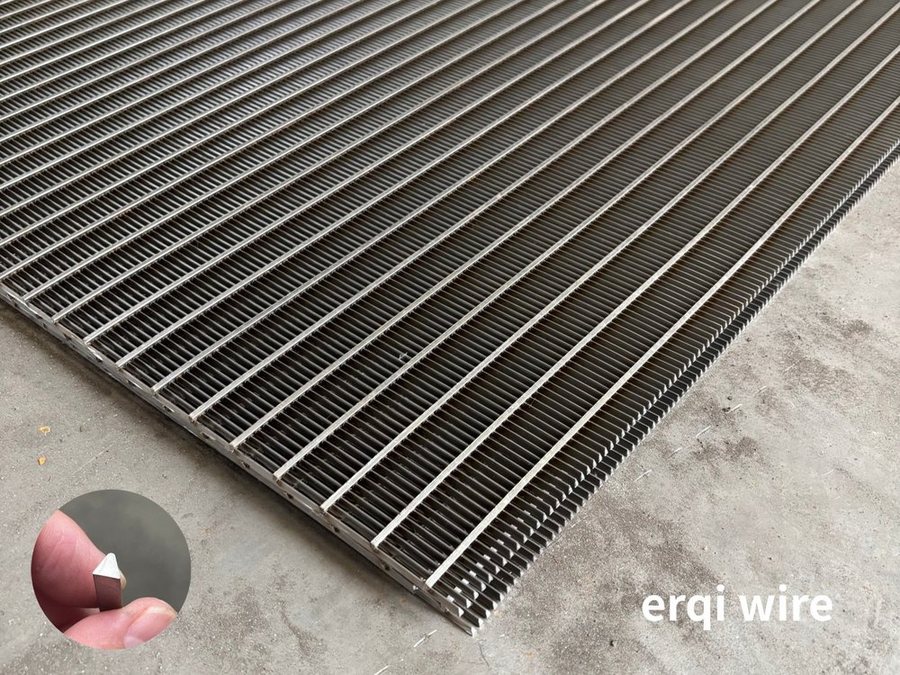
| Material | 304L / 316L / 2205 / 2507 duplex; wrap wire 1.5-3 mm triangular V-profile |
|---|---|
| Size range | OD 60-178 mm (2 3/8"-7"), slot 0.40-1.00 mm sized to gravel, heavier profile and bar schedule for collapse duty, all-welded wrap |
| Typical application | Gravel-packed completions, high-rate water supply and injection wells, thermal heavy-oil wells, offshore sand-prone reservoirs |
| Cross-section | Square — also drawn to your drawing |
| Surface | Bright drawn, as required |
| Packing | Coil, spool or straight length |
A gravel pack screen and a direct sand control screen look identical from the outside — same V-wire, same all-welded wrap, same base pipe. They differ in what the screen is asked to hold. In a gravel-packed completion the gravel does the sand control; the screen only has to keep the gravel where it was placed. That single difference changes the slot size, the wire profile, and the number that actually governs the design.
The screen holds gravel, not sand
Formation sand gets stopped by the gravel pack — a graded sand pack against the formation whose grains bridge against each other. The screen sits behind the gravel and must not let the gravel escape into the wellbore. Gravel is much coarser than formation sand, so slots run larger: 20/40 gravel typically wants 0.6–0.8 mm slots, 40/60 gravel 0.4–0.5 mm, and the field rule is that the slot stays well below the gravel's own D10 so a single broken bridge cannot pour gravel through. Sizing the screen as if it were stopping formation sand directly — the usual copy-paste error — gives slots so fine that the gravel itself plugs them during placement, and the pack fails before the well produces.
Heavier section, because collapse is the failure mode
During placement, the screen sees the full hydrostatic of the slurry column plus the surge of gravel moving through the workstring. After placement, it carries the differential between the pack and the wellbore for the life of the well. A screen jacket built like a light-duty dewatering panel will deflect into the base pipe perforations and lose its slot accuracy at depth. So gravel pack screens run a heavier wrap profile — 1.5 mm minimum, commonly 2×4 or 3×5 mm — a tighter support bar schedule, and full-penetration welds at every crossing. The duplex grades earn their premium here: 2205 and 2507 give roughly 2.5 times the yield of 316L, which at the same geometry is collapse margin rather than just corrosion allowance.
| Gravel | 20/40, 40/60, 16/30 on request |
|---|---|
| Slot | 0.40–1.00 mm, set against the gravel analysis, gauge +/-0.05 mm |
| Wrap profile | 1.5–3 mm triangular V-wire; 2×4 / 3×5 mm for high-collapse designs |
| Support bars | Axial, 4–8 mm section, schedule set by collapse calculation |
| Base pipe | Perforated 2 3/8"–7" OD; blank pipe extensions per completion design |
| Materials | 304L, 316L, 2205, 2507 duplex; C276 on request |
Thermal and offshore duty
Steam-stimulated heavy-oil wells combine hot water, chloride and repeated thermal cycling, which is the exact condition set where 316L stress-corrodes — those wells default to duplex wrap with matched support bars. Offshore sand-prone reservoirs add the constraint that a screen failure means a workover with a rig, not a pump change, so the collapse calculation and the weld inspection record ship with the screens, not after them.
How the order starts
The inputs are the gravel specification (or the formation sand analysis if you want us to propose the gravel), casing size and thread, depth and bottom-hole temperature. The slot, profile and bar schedule follow from those four. Send the completion design and we will return a screen specification with the collapse margin shown, so the rig decision and the screen decision use the same number. The mechanics of slot sizing itself are in the slot size article, and the construction is shared with our wire wrapped sand control screens.
Related products
Ready to start your project?
Send us your drawing or sample — we reply within 24 hours on working days.