Home/Products/Wedge Wire/Wedge Wire Water Well Screens
Wedge Wire Water Well Screens
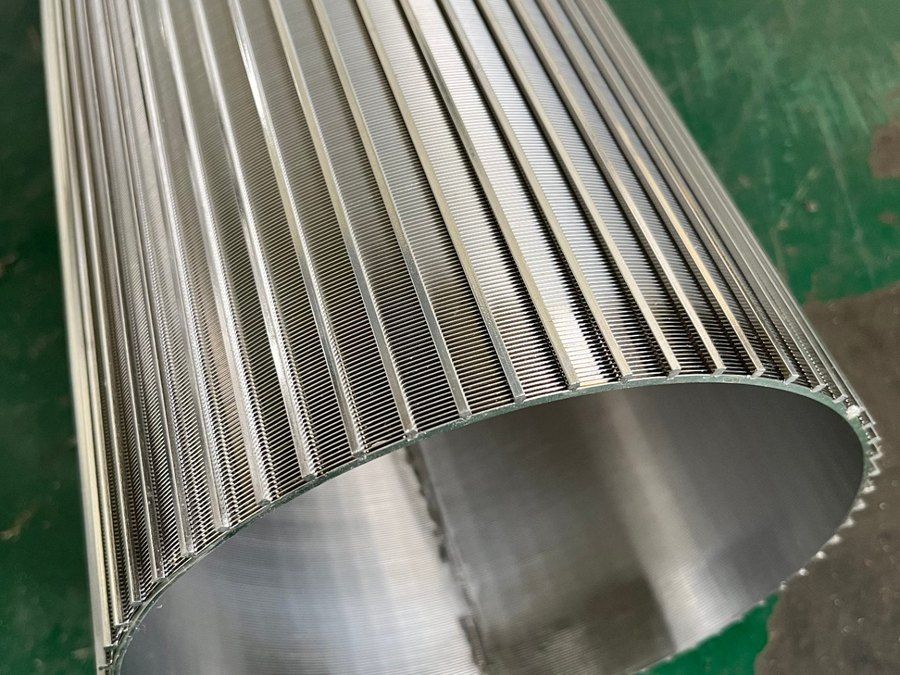
Continuous-slot screens for water wells: V-wire wound on axial rods, slot held the length of the joint, open area several times a slotted pipe's, and a surface that cleans itself under development.
Wedge Wire Water Well Screens
Continuous-slot screens for water wells: V-wire wound on axial rods, slot held the length of the joint, open area several times a slotted pipe's, and a surface that cleans itself under development.
| Material | 304 / 316L low carbon / 2205 duplex for brackish and geothermal water; continuous-slot V-wire |
|---|---|
| Size range | OD 60-500 mm, slot 0.5-3.0 mm, length to 6000 mm, threaded, flanged or weld-ring connections, gravel-pack or formation-completion types |
| Typical application | Water supply wells, monitoring wells, dewatering wells, geothermal and brine wells, mine depressurisation, aquaculture and irrigation wells |
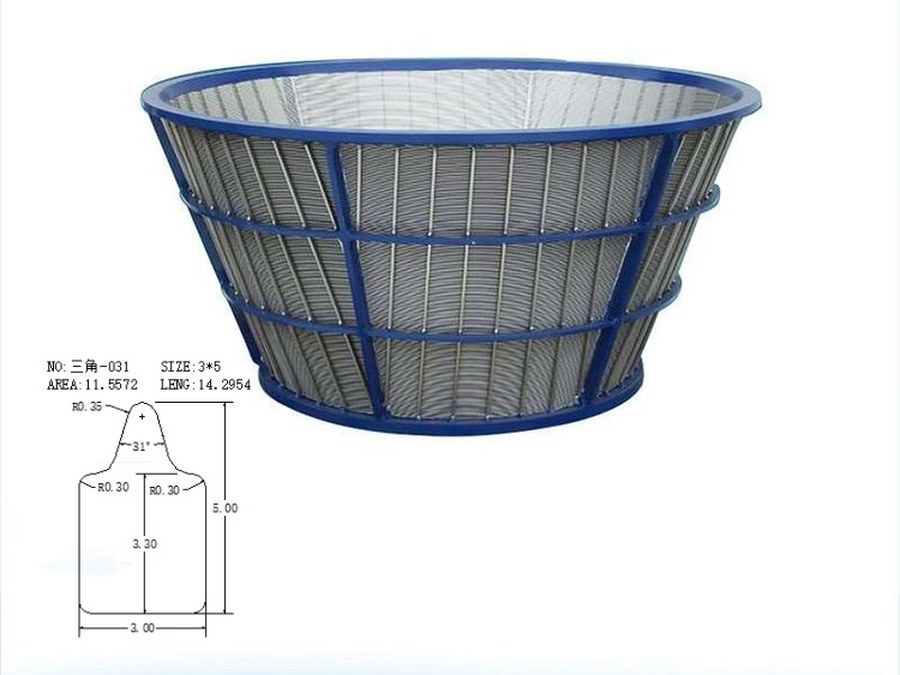
| Cross-section | Square — also drawn to your drawing |
| Surface | Bright drawn, as required |
| Packing | Coil, spool or straight length |
A water well screen has one job with two halves: keep the formation out, let the water in without choking on its own open area. A continuous-slot wedge wire screen does both better than a slotted pipe for the same reason a wedge screen beats cloth everywhere — the opening is a slot that widens inward, so it clears instead of plugging, and the wire construction gives far more open area per metre of pipe.
Open area is the whole argument
A slotted PVC or steel pipe gives perhaps 3–8 percent open area; the same OD in wedge wire runs 15–25 percent depending on slot and wire section, and can go higher with a wider slot. That difference shows up as specific capacity at commissioning and as entrance velocity for the life of the well: higher velocity means more fines pulled toward the screen, more drawdown, more chance of sand entry. The full comparison, including where slotted pipe still wins, is in the water well screen comparison article.
Slot sized to the formation
Formation-completion screens take a slot matched to the sand analysis — commonly the D50 of the formation with a safety allowance, and where gravel packing is used the slot is sized to retain the pack rather than the formation. Slot is measured at the outside face, joint by joint, because a screen that opens up in one band passes sand for the whole well's life. The arithmetic behind it is the same as on oil screens: slot sizing from sieve data.
Strength and connections
A screen down a 200 m well carries the load of the string above it and takes the shock of installation, so rod schedule and end connections are specified, not assumed. Threaded couplings for standard casing sizes, weld rings for welded strings, flanges for surface completion — all in the same alloy as the wire. 304 covers most potable water duty; 316L low carbon where chlorides are present; 2205 for brackish, geothermal and brine wells where 316L would pit.
Specifications
| OD | 60–500 mm (2"–20" casing sizes common) |
|---|---|
| Slot | 0.5–3.0 mm, outside face, continuous along the joint |
| Length | To 6000 mm per joint |
| Open area | 15–25% typical, quoted with the slot |
| Connections | Threaded coupling, weld ring, flange |
| Materials | 304, 316L low carbon, 2205 duplex |
Water well screens use the same wrap construction as our screen cylinders and share slot practice with the oil well screens; heavier wall sections for gravel pack are on the gravel pack screens page. Send the well diameter, slot, joint length and water chemistry, and the quote will include the open area figure and the alloy we would recommend for that water.
Related products
Ready to start your project?
Send us your drawing or sample — we reply within 24 hours on working days.